Some swimming schools offer lessons for babies as young as three months such as 3-month-old swimming lessons, but many Australian programs begin at six months. At this age, babies depend on adults for support in the water, so early swimming activities focus on gentle movement and familiarity rather than learning to swim independently.
If your baby is three months old, there is no need to rush into formal lessons. Bath time offers an opportunity to introduce water through familiar routines, gentle play and close interaction before your baby is old enough to join a suitable swimming program.
Understanding what is appropriate at this age can help you decide when to start lessons and what you can safely do at home in the meantime.
Can a 3-Month-Old Baby Start Swimming Lessons?
Yes, some swim schools accept babies from three months, although the minimum age varies between programs. In Australia, many established infant swimming programs start at six months, including those offered by Royal Life Saving Australia.
The main consideration is what a baby can reasonably learn at this age. Three-month-olds are still developing control over their head and body, and they cannot swim independently or keep themselves safe in water. Any early aquatic activity must therefore involve continuous physical support from an adult.
According to Royal Life Saving Australia, infant lessons can help babies become familiar with water and provide opportunities for parent–child interaction. However, young infants should not be expected to develop independent swimming or emergency-response skills.
If you are considering a class that accepts three-month-olds, ask how parents support their babies, what activities are included and how the program accommodates very young infants. Babies born prematurely or with medical concerns may need individual advice from their healthcare professional before attending a pool.
What Can Babies Learn from Early Water Experiences?
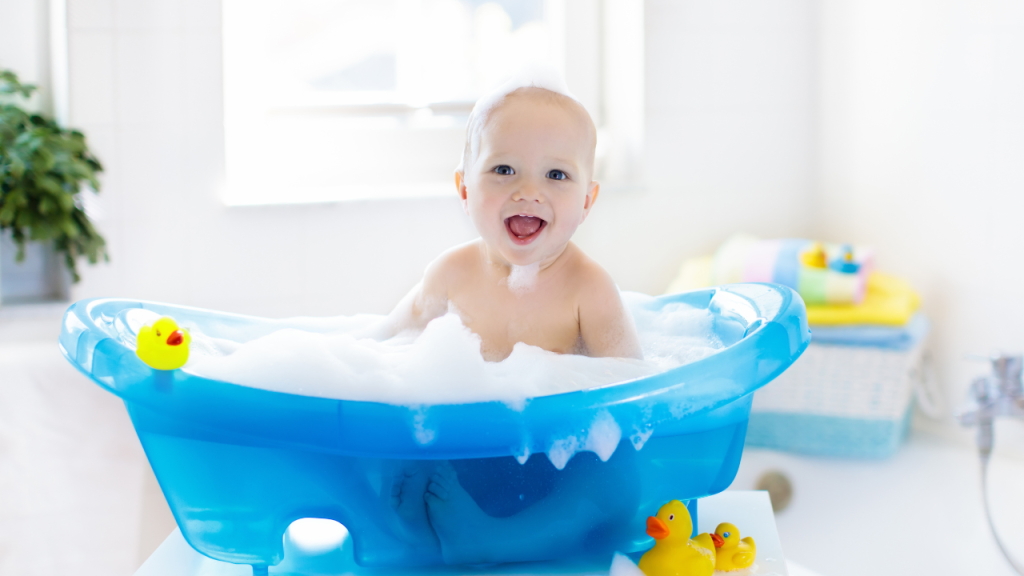
At three months, getting familiar with water is more relevant than practising swimming techniques. Babies are becoming more alert, recognising familiar voices and responding to gentle interaction, so ordinary bath time already provides opportunities to experience water in a familiar setting.
Talking, singing and gentle washing allow your baby to experience the warmth and movement of water with a trusted adult close by. These interactions can become part of a predictable routine without introducing unfamiliar positions or activities.
It is also useful to keep expectations realistic. A baby who appears relaxed during a bath has not necessarily developed swimming ability or an understanding of water safety. These skills require learning and development over time.
There is no specific bath-time milestone your baby needs to achieve before starting lessons. The aim is simply to make ordinary water experiences comfortable and manageable for both of you.
How to Keep Bath-Time Water Play Safe
A safe bathing environment matters more than the number of activities you introduce. At three months, your baby still needs secure head and neck support, and even a small amount of water can be dangerous if their face becomes submerged.
Keep the Water at a Comfortable Temperature
The recommended bath temperature for babies is 37–38°C, according to the Raising Children Network. Use a bath thermometer if available, or check the water with your wrist or elbow to make sure it feels comfortably warm rather than hot.
Fill the bath with only enough water for washing and mix it thoroughly before lowering your baby in. Avoid adding hot water during the bath, as this can create areas of water that are too hot.
Support Your Baby Throughout the Bath
Keep one arm securely supporting your baby’s head and upper body while using your free hand for washing or gentle play. The nose and mouth should remain clear of the water throughout.
Bath seats and support products do not replace adult supervision. If you need to answer the door or leave the bathroom, take your baby out of the bath and bring them with you.
Keep Bath Time Brief
A normal bath of approximately 5–10 minutes is generally enough for a young baby. There is no need to extend the bath to complete additional water activities, especially if your baby becomes cold, tired or unsettled.
Royal Life Saving Australia emphasises that babies must never be left alone in the bath, even briefly. Preparing towels, clean clothes and other essentials beforehand allows you to keep your attention on your baby throughout.
5 Gentle Bath-Time Water Activities for 3-Month-Old Babies
You can introduce these activities during an ordinary bath without turning it into a swimming lesson. Each takes only a few moments and can be adjusted according to how your baby responds.
1. Talk and Sing During Bath Time
Your baby is already familiar with your voice, making talking and singing a natural way to introduce water activities. As you gently wash their hands or feet, describe what you are doing or repeat a familiar song.
Using similar words and actions during each bath helps make the experience predictable. Pause occasionally to let your baby look towards you or respond with small movements.
Tip: Keep your voice calm and follow your baby’s attention. If they become restless or begin crying, return to normal washing or finish the bath rather than trying to continue the activity.
2. Introduce Gentle Water Contact
Start by letting small amounts of warm water move over your baby’s hands, feet or tummy during washing. Use your free hand to guide the water gently over the skin while maintaining secure support.
There is no need to pour increasing amounts of water or introduce new sensations quickly. Allow your baby time to respond before repeating the movement.
Tip: Begin with areas your baby already tolerates being washed. Avoid deliberately pouring water over the nose or mouth or attempting underwater activities at home.
3. Explore Water with a Soft Washcloth
A clean, soft washcloth can add variety to an ordinary bath. Gently move the damp cloth over your baby’s arms and legs, allowing them to experience the texture alongside the warmth of the water.
You can talk through each movement, such as washing one hand and then the other. This keeps the activity familiar and gives your baby time to respond without introducing toys or complicated exercises.
Tip: Use light pressure and avoid rubbing sensitive skin repeatedly. Keep the cloth away from the nose and mouth, and stop if your baby appears uncomfortable.
4. Watch Gentle Ripples in the Water
With your baby securely supported, move your free hand slowly across the bath surface to create small ripples. Keep the movement within their view and pause to see whether they notice the changing water.
This activity introduces water movement without requiring your baby to change position. Small ripples are enough; splashing is not necessary.
Tip: Keep the water calm and away from the face. If your baby startles or becomes upset, reduce the movement and return to familiar washing activities.
5. Allow Natural Arm and Leg Movements
You may notice your baby stretching their arms, bending their knees or making small kicking movements during a bath. These movements can happen naturally when they are comfortable and supported.
There is no need to turn them into swimming exercises. At three months, practising a specific kick or asking a baby to float independently is not appropriate.
Tip: Maintain secure support and let your baby move freely within a comfortable position. Avoid pulling their arms or legs through swimming motions or placing them in unsupported floating positions.
When Should Babies Move from Bath Time to Swimming Lessons?
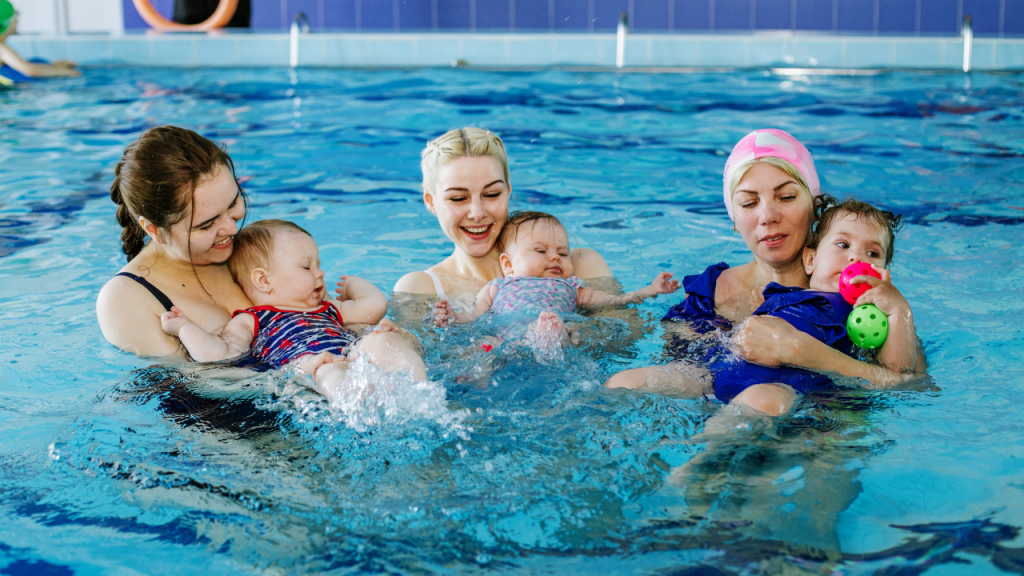
Many Australian infant swimming programs begin at around six months, although individual swim schools set their own minimum ages. Starting at six months does not mean a baby is ready to swim independently; lessons at this stage are primarily about supported movement, water familiarity and interaction with a parent or carer.
Early baby classes commonly include songs, gentle movement, supported floating and activities that gradually introduce different water sensations. Parents or carers stay in the pool and help guide their child under the instructor’s direction.
Your baby’s comfort and development still matter. If they become distressed by unfamiliar movements or need more time to settle, activities should be adjusted instead of rushed.
Formal lessons also provide something that home bathing cannot: a structured teaching environment where instructors guide age-appropriate activities and show parents how to support their child in the water.
For a broader explanation of infant readiness and swimming programs at different ages, the age to start baby swimming lessons is worth considering alongside your child’s individual needs.
Baby Swimming Lessons at Swim4Life from Six Months
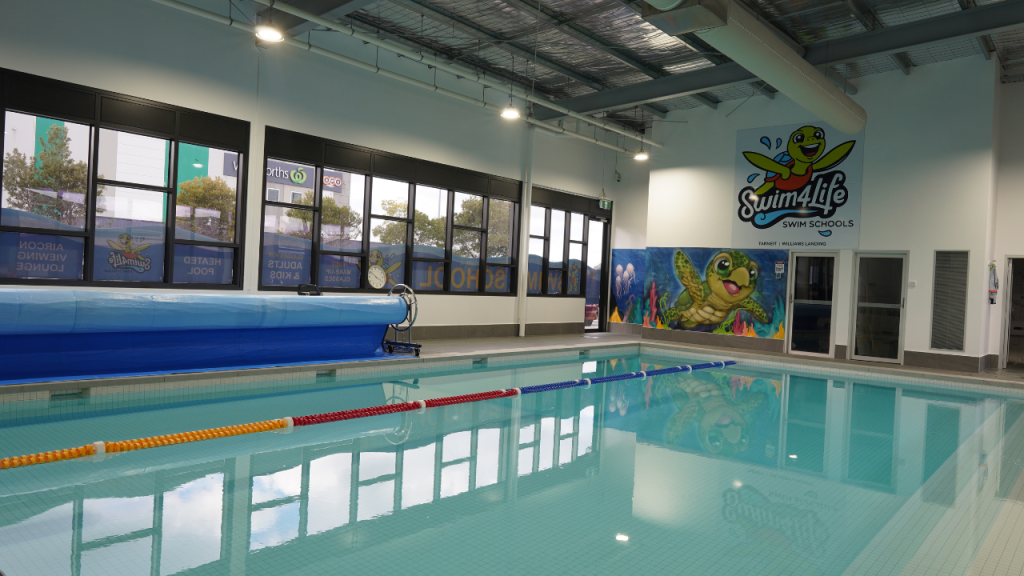
Bath-time activities can help your baby become familiar with water at home. From six months, Swim4Life offers a structured Baby & Toddler swimming program where parents or carers are actively involved in supporting their child throughout each lesson.
Classes are available at Tarneit and Williams Landing, with small groups, qualified instructors and warm 32°C magnesium mineral pools. The program introduces activities suited to each child’s age and ability, giving families guidance on supported movement and early aquatic skills.
Parents also have an opportunity to learn how to hold, position and assist their baby during different activities. This hands-on guidance helps families understand what their child is practising and how to provide appropriate support in the water.
For families around Werribee, Hoppers Crossing, Truganina and Wyndham Vale, baby swimming lessons in Tarneit provide a local option. Those based near Point Cook, Laverton and Altona can explore baby swimming lessons in Williams Landing.
If your baby is three months old, gentle bath-time play is enough for now. When they reach the program’s starting age, Swim4Life provides the facilities and instructor guidance to introduce swimming activities at a manageable pace.
FAQs About 3-Month-Old Swimming Lessons
Is Three Months Too Early for Swimming Lessons?
Not necessarily. Some swim schools offer parent-supported classes from three months, but many Australian infant programs begin at six months. The appropriate choice depends on the baby’s health, development and the activities included in the program.
Can I Take My 3-Month-Old Baby to a Swimming Pool?
Some pools allow babies from three months, but admission policies and suitable facilities vary. Check the pool’s age requirements and water conditions beforehand, and speak with your healthcare professional if your baby was premature or has a medical condition.
What Is the Best Bath Temperature for a 3-Month-Old?
The recommended temperature is 37–38°C. Use a bath thermometer where possible, or test with your wrist or elbow. The water should feel warm, not hot.
Do I Need to Give My Baby a Bath Every Day to Prepare for Swimming?
No. Two or three baths per week are generally sufficient for hygiene, according to the Raising Children Network. Bath-time play can be included naturally without adding extra bathing sessions.
Can Bath-Time Activities Teach My Baby to Swim?
No. Gentle water play introduces familiar sensations and parent–baby interaction, but it does not teach independent swimming or the ability to respond safely in water. Structured lessons can introduce age-appropriate skills as your child develops.