

Backstroke is often one of the most confidence-building strokes children learn. Because the face stays above the water, children can breathe freely and focus on movement without fear. When taught calmly and progressively, backstroke helps children develop balance, coordination, and independence in the water while strengthening essential water safety skills.
Why Backstroke Is an Essential Skill for Children
Backstroke offers unique benefits for beginner swimmers. The face-up position allows continuous breathing, which reduces anxiety and builds confidence. This stroke supports water safety skills by teaching children how to float, move, and rest safely on their back.
Among beginner swim strokes, backstroke is often mastered early because it removes complex breathing patterns. A key backstroke benefit for kids is improved body awareness and balance, which prepares children for more advanced swimming techniques later.
What Age Should Children Learn Backstroke?
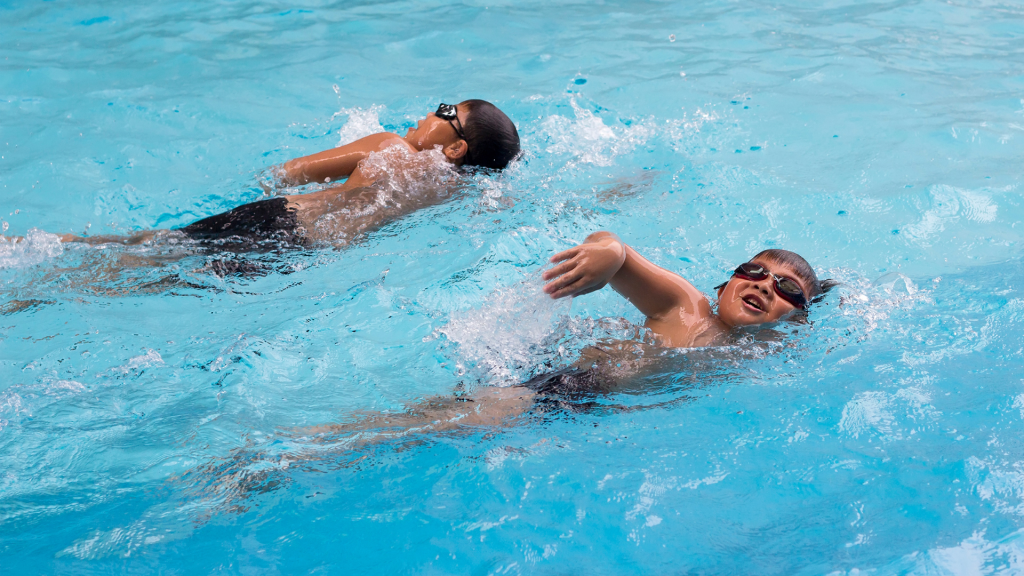
Most children begin learning basic backstroke skills between ages three and six, with technique refinement developing from age six onward. Readiness matters more than age. Children should be comfortable floating on their back, able to kick gently, and relaxed with water on their ears.
In child swim development, confidence and comfort signal readiness more accurately than milestones alone. A flexible swimming lessons age guide allows children to progress safely and happily.
Step-by-Step: How to Teach Backstroke to Children
Step 1: Building Confidence on the Back
Start by helping children feel safe and relaxed while floating on their back. Support the head and shoulders gently, encouraging a calm posture and steady breathing. Use simple relaxation cues such as “ears in the water” and “eyes looking up.” Confidence on the back is essential. When children trust the position, learning becomes easier and safer.
Step 2: Teaching the Backstroke Kick
The backstroke kick uses small, fast movements from the hips. Legs stay long and relaxed, with toes pointed lightly. Avoid bent knees or bicycle kicking by reminding children to “kick like tapping the water.” Wall-supported kicking and short kickboard drills help children feel the correct motion while maintaining balance and control. Wall-supported kicking and kickboard drills help reinforce the motion. In the kickboard drill, children hold a kickboard with straight arms, float on their back, and practise steady flutter kicks while maintaining balance.
Step 3: Introducing Arm Movements
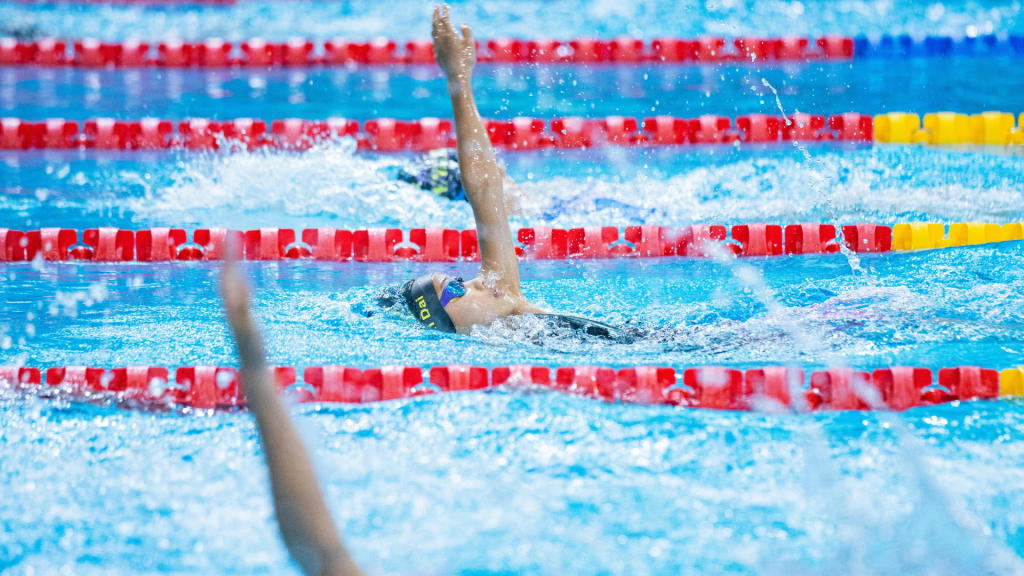
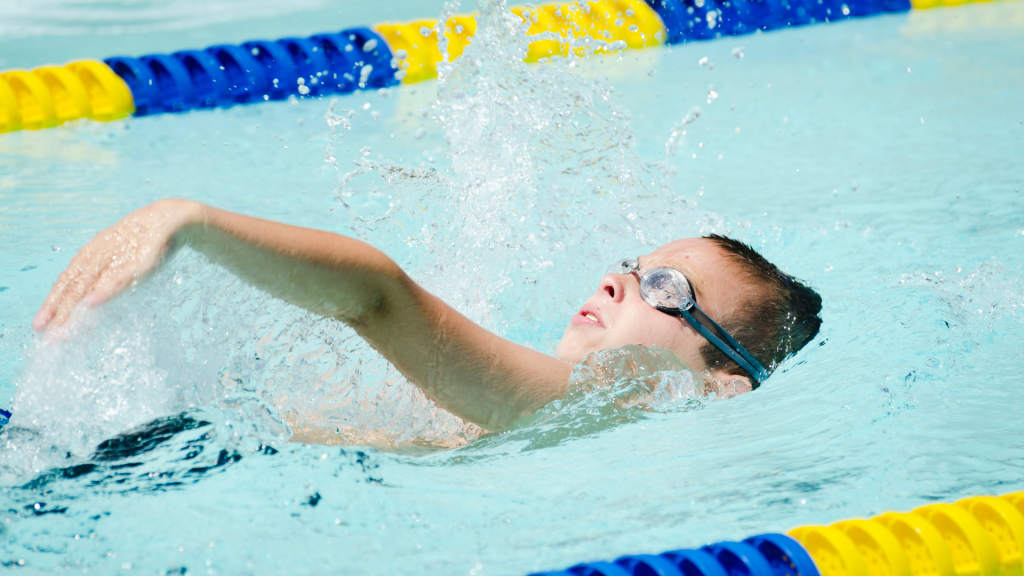
Introduce arms one at a time to reduce overload. Backstroke arms move in an alternating pattern with a straight-arm recovery. Simple cues such as “thumb out, little finger in” help children remember correct hand rotation. Keep movements slow and controlled at first, focusing on direction rather than power. This stage builds coordination and confidence.
Step 4: Putting It All Together
Once children are comfortable with floating, kicking, and arm movements, begin combining the skills. Emphasise a streamlined body position with hips near the surface and relaxed shoulders. Start with short distances to prevent fatigue. Teaching through micro-progressions keeps children motivated, safe, and focused. This approach reflects effective swim teaching progressions used by experienced instructors.
Common Backstroke Mistakes (and How to Fix Them)
- Sinking hips often occur when children tense their body. Encourage gentle kicking and relaxed posture to bring the hips back to the surface.
- Bent knees or bicycle kicking reduce efficiency. Remind children to kick from the hips with long legs.
- Lifting the head causes the body to sink. Cue children to keep ears in the water and eyes looking upward.
- Arms crossing the midline disrupt balance. Encourage shoulder-width arm entry to maintain alignment.
- Overall stiffness limits movement. Use games and relaxed drills to restore fluid motion.
Quick, calm corrections help children adjust without frustration.
How Qualified Swim Teachers Help Children Learn Faster
Qualified swim teachers provide structure, safety, and confidence. Lessons follow planned progressions that match each child’s ability. Teachers monitor safety closely while offering personalised feedback. Consistency helps children build trust and refine technique without rushing. Gentle swim instruction reduces the risk of poor habits and supports long-term skill development. With professional guidance, children progress faster while staying safe and confident.
Ready to Help Your Child Master Backstroke?
At Swim4Life Swim School, children learn backstroke through calm, child-centred instruction that prioritises safety and confidence. Qualified teachers guide each child with clear progressions and supportive feedback. Small class sizes allow focused learning and individual attention. If you want your child to build strong backstroke technique and water confidence, explore Swim4Life’s children’s swimming programs today.