

The most effective way to overcome fear of swimming as an adult is through gradual exposure in a controlled environment — starting in warm, shallow water, learning to control breathing before attempting strokes, and progressing to deeper water only when ready. A qualified instructor who adjusts each lesson to your comfort level and a heated pool with gradual depth entry make the difference between lasting progress and another failed attempt.
Fear of swimming is more common than many adults realise. According to Royal Life Saving Australia, one in four Australian adults are either weak swimmers or cannot swim, and 36% of non-swimmers say fear of the water is the main reason. In Australia, where beaches, pools and water activities are part of everyday life, learning to feel comfortable in the water is an important life skill. The good news is that fear of swimming can be overcome. With the right support, a gradual approach and plenty of practice, most adults can build confidence in the water at their own pace.
Understanding Where the Fear Comes From
Most adults who fear swimming describe one or more of the following:
- A past experience that may have caused water-related trauma, such as being pushed into a pool or feeling out of control in deep water.
- Never learning as a child, making water feel unfamiliar
- Fear of not being able to touch the bottom or losing control
- Discomfort with water on the face or not knowing how to breathe while swimming
- Feeling embarrassed about being a beginner as an adult
Recognising what drives your fear helps you work through it gradually rather than trying to force yourself past it.
If your fear comes from a previous negative experience, remember that it doesn’t have to define your relationship with water forever. Learning in a calm, supportive environment and progressing at your own pace can gradually rebuild confidence. As each lesson becomes a positive experience, many adults find that their fear becomes easier to manage over time.
Read more about: 7 Tips to Help Children Overcome the Fear of Water and Swimming
Practical Steps to Overcome Fear of Swimming
Fear of swimming responds to gradual, repeated exposure in a controlled environment. The steps below follow the order most adult beginners work through — each one builds on the last.
Start in Shallow, Warm Water
Cold water increases muscle tension, and deep water removes the option of standing up — both make anxiety worse. A pool heated to around 30–32°C and shallow enough to stand in comfortably is the starting point. A gradual depth entry, where the floor slopes rather than drops off, lets you control how deep you go at every step.
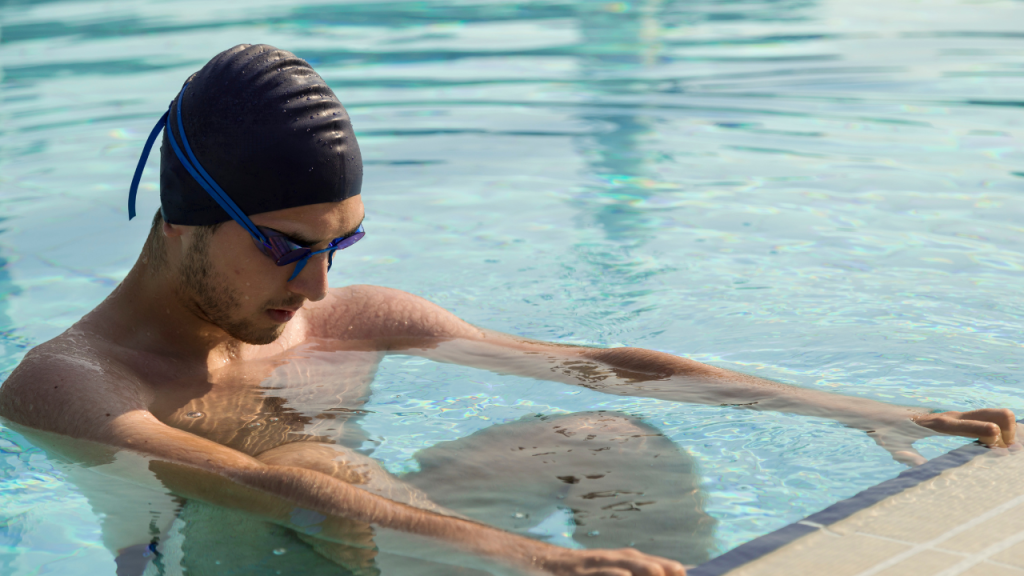
Spend the first sessions walking in the water, splashing your arms and face, and holding the pool wall. The goal is to let your body register that standing in water is safe before asking it to do anything else.
Learn to Breathe Before You Swim
When anxiety rises, breathing becomes shallow and rapid, which tenses the body and makes floating harder. Standing in shallow water, practise slow exhales through your mouth or nose into the water. Blowing bubbles teaches your body that breathing out while in contact with water is a safe action.
Once that feels comfortable, try submerging your face briefly while exhaling. Build the duration over several sessions. Breathing control is the single skill that reduces panic most — it should come before any stroke technique.
Get Comfortable with Water on Your Face
For many adults, the sensation of water on the face is the specific trigger. This is a physical reflex that responds to repeated, gentle exposure — not something you can reason your way through.
Splash water on your face while standing. Then lower your face in for a second or two while holding the pool edge. Goggles help by removing the sting and letting you see underwater, which reduces disorientation.
Practise Floating with Support
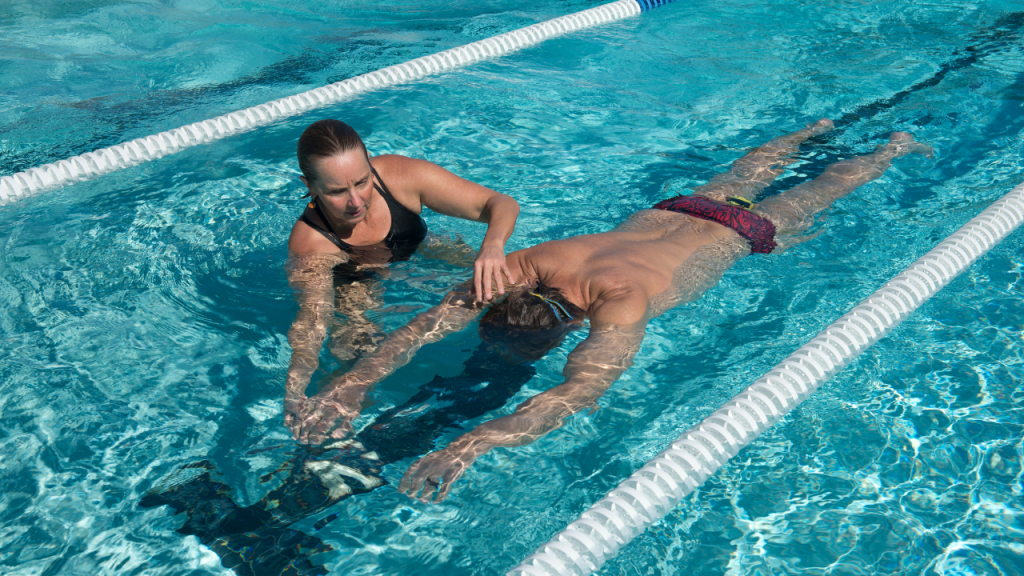
Floating is where your relationship with the water changes. Once your body learns that water holds you up, the fear of sinking loses its grip. Start with your instructor supporting your back while you lean into a floating position, then gradually reduce the support over multiple sessions.
You do not need to swim laps at this stage. Most adults who overcome fear of swimming progress through comfort, breathing and floating before moving into full strokes — and that progression is what makes the confidence last.
Set Small, Specific Goals
A first goal might be standing in waist-deep water for five minutes without holding the edge. The next might be blowing bubbles for ten seconds, then floating with support, then without. Each goal proves to your body that the water is manageable.
Avoid comparing yourself to others. One in four Australian adults are weak swimmers or cannot swim — adult beginners are far more common than most people assume.
If your fear comes from a past traumatic experience, follow the steps above and trust your instructor to guide you. With time and positive experiences in the water, the trauma can gradually feel less overwhelming as your confidence grows.
Discover more detail information about adult swimming lessons at Swim4Life
Common Mistakes to Avoid
Three mistakes slow progress more than anything else. Rushing — jumping into deep water before building foundation skills — can increase fear rather than reduce it. Skipping the basics — trying strokes before mastering breathing, floating and water comfort — makes every technique feel stressful. And letting embarrassment prevent you from starting at all, despite adult swimming lessons being a routine part of swim school programs across Australia.
How Professional Lessons Help
A qualified instructor adjusts each lesson to your comfort level and recognises when to pause rather than push. For adults with a fear of swimming, the learning environment matters as much as the instruction itself.
Why Private Lessons Work for Fearful Adults
Private one-on-one lessons remove the two biggest barriers: having a group to keep pace with, and feeling watched. The session is shaped entirely around your comfort level, and your instructor can spend as long as needed on any single step — breathing, floating, face submersion — without time pressure from other students.
Find out more about 7 Benefits of Swimming for Mental Health, Stress Relief and Wellbeing
What to Look for in a Pool Environment
A pool heated to around 32°C keeps muscles relaxed and reduces the shock of entering the water. Gradual step entry with multiple depth levels lets you choose exactly how deep you go. Small class sizes (four students or fewer) mean less exposure to strangers. And pools using mineral water rather than heavy chlorine reduce sensory triggers — the smell of chlorine alone can increase anxiety for some adults.
At Swim4Life, adult lessons are held in chlorine-free Magna Mineral Water heated to 32°C, with gradual step entry across 8 to 10 depth levels and a maximum of four students per class. Private lessons are also available. Lessons begin with water familiarity, breathing and floating, and progress only when you are ready.
Frequently Asked Questions
How long does it take to overcome a fear of swimming?
It varies. Some adults feel more comfortable within a few weeks of regular lessons. Others need longer. Consistency matters more than speed.
Will I be in a class with children?
Most swim schools schedule adult lessons separately. At Swim4Life, adult and children’s programs run at different times.
What if I panic during a lesson?
Your instructor is trained to recognise and respond to panic. In a private or small-group lesson, they can pause and help you regain control. Panic becomes less frequent with repeated positive experiences in the water.
What should I learn first?
Water comfort, breathing and floating come before strokes. These skills reduce anxiety and make stroke technique easier to learn later.