

Teaching front crawl to children builds water safety, stamina, and confidence. The front crawl swimming stroke is the foundation of efficient swimming and is often the first stroke children learn for distance and speed. With a calm, step-by-step approach, children can develop correct technique without fear.
This guide from Swim4Life will explain how instructors teach front crawl in a supportive way that helps children feel confident, capable, and motivated in the water.
What Is the Front Crawl Stroke in Swimming?
The front crawl is the fastest and most efficient swimming stroke. It involves a horizontal body position, alternating arm movements, continuous flutter kicks, and rhythmic side breathing. The stroke is also known as freestyle front crawl, which is another name for front crawl swimming stroke commonly used in lessons and competitions.
Because the front crawl uses large muscle groups, it builds stamina, strength, and coordination. For children, learning the front crawl swimming technique for beginners improves water confidence, supports safety skills, and creates a strong foundation for all other strokes.
Is Your Child Ready to Learn Front Crawl?
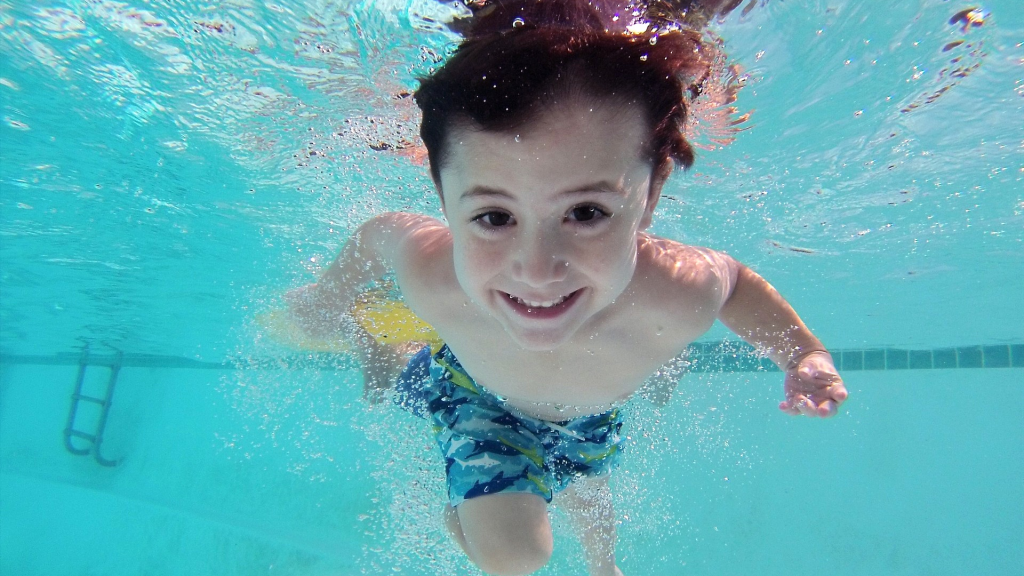
Children learn front crawl best when they feel safe and ready. Signs that a child is prepared include being comfortable in the water, able to float and glide independently, and showing curiosity about swimming. They should also demonstrate a steady, controlled kick with straight legs and relaxed ankles. Children need to follow simple instructions and remain calm with their face in the water.
Readiness matters more than age when teaching front crawl to children.
Front Crawl Swimming Technique Step by Step
Step 1: Introduce body position and water comfort
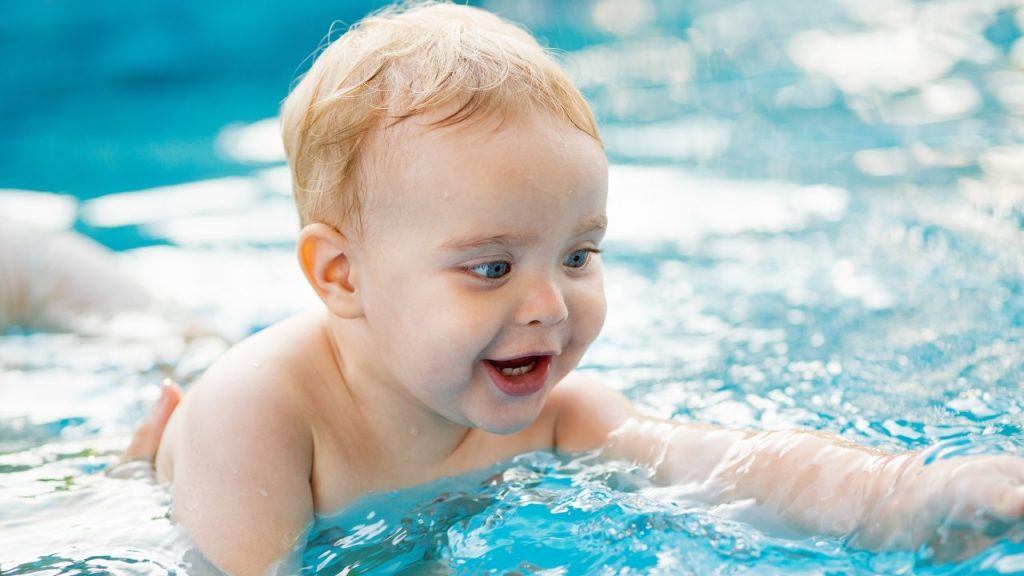
Start with floating and gliding on the front. Help your child feel balanced, relaxed, and supported in a horizontal position.
Step 2: Practise front crawl arm movements
Teach alternating arm actions on land and in water. Focus on reaching forward and pulling back smoothly.
Step 3: Add flutter kicks from the hips
Introduce small, continuous kicks from the hips. Keep legs long and relaxed without bending the knees.
Step 4: Introduce Breathing at the Right Time
Start with no breathing for 6 meters. Let the child focus on kicking and arms first.
When they feel comfortable, teach gentle side breathing with steady exhalation underwater. Do not rush the process.
Step 5: Combine all skills into short swims
Link arms, legs, and breathing over short distances. Focus on confidence before speed.
Key Elements of the Front Crawl Stroke
Body Position
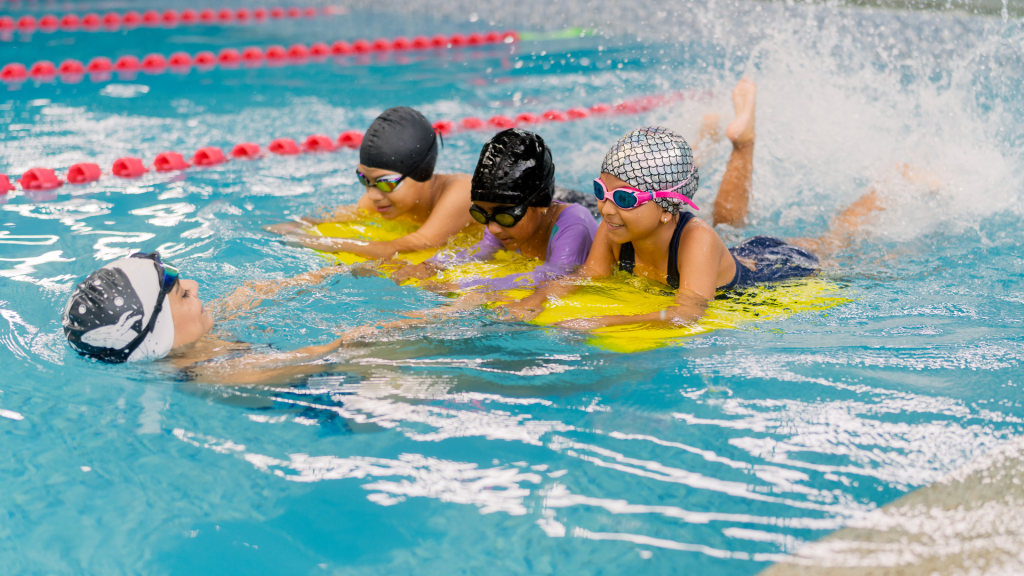
A strong body position keeps front crawl efficient. Children should stay horizontal and streamlined, with the hairline at water level. The hips and heels should remain close to the surface to reduce drag. A stable body position supports balance and makes breathing easier, especially for front crawl swimming technique beginners.
Front Crawl Leg Technique
Front crawl swimming technique legs rely on flutter kicks from the hips. Legs stay long with relaxed ankles and pointed toes. Kicks should be small, fast, and continuous rather than wide or forceful. Correct leg action helps maintain speed and body alignment without causing fatigue.
Front Crawl Arm Technique
Front crawl swimming technique arms use alternating movements. Each arm reaches forward, enters the water at shoulder width, and pulls smoothly towards the thigh. A strong finish near the hip helps propel the body forward. Recovery happens above water with a relaxed, high elbow.
Front Crawl Breathing for Beginners
Front crawl swimming technique breathing should feel natural and calm. The head turns to the side rather than lifting forward. Children exhale slowly underwater and inhale quickly to the side, coordinated with body roll and arm timing.
Timing and Rhythm
Good front crawl stroke technique relies on rhythm, not speed. Each part is practised separately before being combined. Repetition builds coordination. Children improve faster when the focus stays on smooth movement rather than racing.
Common Challenges and How to Support Your Child
Many children face similar challenges when learning front crawl. Lifting the head too high often means side breathing needs more practice. Bent-knee kicking can be corrected by encouraging long kicks from the hips. Crossing arms usually improves with clear shoulder-width cues. Holding breath underwater improves when children learn calm, steady exhalation.
Front Crawl Swimming Technique Tips
Progress matters more than perfection. Use the same key words instructors use, such as “long legs” and “bubbles,” to reinforce learning. Celebrate effort and small improvements. Gentle encouragement helps children stay motivated and confident. Parents play an important role in supporting learning outside lessons.
What Are the Differences Between Front Stroke, Front Crawl, and Sidestroke?
| Stroke | Body Position | Arm Movement | Leg Action | Breathing |
| Front Crawl (Freestyle) | Face down, horizontal | Alternating arms | Flutter kicks | Side breathing |
| Front Stroke | Face forward | Symmetrical arms | Frog kick | Forward breathing |
| Sidestroke | Side-facing | Scissor arms | Scissor kick | Side breathing |
Front crawl vs front stroke and front crawl vs sidestroke differ in speed, efficiency, and coordination. The front crawl is the fastest swimming stroke and builds endurance more effectively.
Swim4Life – Where Front Crawl Confidence Begins
Swim4Life Swim School specialises in teaching front crawl to children with patience and care. Lessons focus on real skill-building without floaties or goggles. Small class sizes allow personalised instruction and steady progress. With locations in Tarneit and Williams Landing, Swim4Life helps children build strong front crawl technique, confidence, and water safety. Book a trial lesson or explore our programs today.