Swimming warm-up exercises help prepare the body for movement before a swimming lesson or pool session. For children and beginner swimmers, a short routine can gradually increase heart rate, get the shoulders and legs moving, and prepare the body for the activities ahead.
A warm-up does not need to be complicated or tiring. Simple exercises such as marching, arm circles and gentle squats can prepare the body on land, followed by easy movement in the water.
The following five-minute routine combines seven swimming warm-up exercises. Each movement is explained in more detail below, including how to perform it correctly, useful tips and common mistakes to avoid.
A Simple 5-Minute Swimming Warm-Up Routine
This five-minute routine combines six gentle land-based exercises with easy movement in the water. Each activity prepares a different part of the body for swimming, helping children and beginners start gradually without becoming tired before their lesson.
| Time | Exercise | Purpose |
| 1 minute | Marching on the Spot | Gradually increases heart rate and activates the legs. |
| 45 seconds | Arm Circles | Prepares the shoulders for repeated swimming movements. |
| 45 seconds | Shoulder Rolls and Overhead Reaches | Encourages comfortable shoulder movement and overhead reaching. |
| 30 seconds | Gentle Torso Rotations | Introduces body rotation used in freestyle and backstroke. |
| 30 seconds | Bodyweight Squats | Activates the hips and legs for kicking and wall push-offs. |
| 30 seconds | Heel Raises and Ankle Movements | Prepares the ankles and lower legs for kicking. |
| 1 minute | Gentle Movement in the Water | Helps swimmers adjust to movement and resistance in the pool. |
The timings are a practical guide and can be adjusted to suit each child’s age, coordination and swimming ability. The first six exercises should take place on dry, non-slip ground, while the final activity should only begin when pool access is permitted and appropriate supervision is available.
Tip: Before swimming, encourage children to take 3–4 slow, gentle breaths over 30–40 seconds, without holding their breath. This can help them feel calmer and more focused before entering the pool.
Why Is Warming Up Before Swimming Important?
Swimming involves repeated movements across the shoulders, arms, core, hips and legs. Beginning with light activity gradually increases heart rate and circulation, preparing the body for actions such as reaching, kicking and pulling through the water.
Better Health Channel recommends warming up before swimming and increasing exercise intensity gradually. Gentle preparation is useful before swimming, although a warm-up cannot guarantee that injuries will be prevented.
For children, warming up can also make the transition into their lesson easier. After sitting in the car or waiting at the pool, familiar movements provide an opportunity to become active, follow instructions and settle into the session ahead.
The goal is preparation, not fatigue. Exercises should be comfortable, controlled and appropriate for the swimmer’s age, ability and the activities planned for the lesson.
7 Swimming Warm-Up Exercises for Kids and Beginners
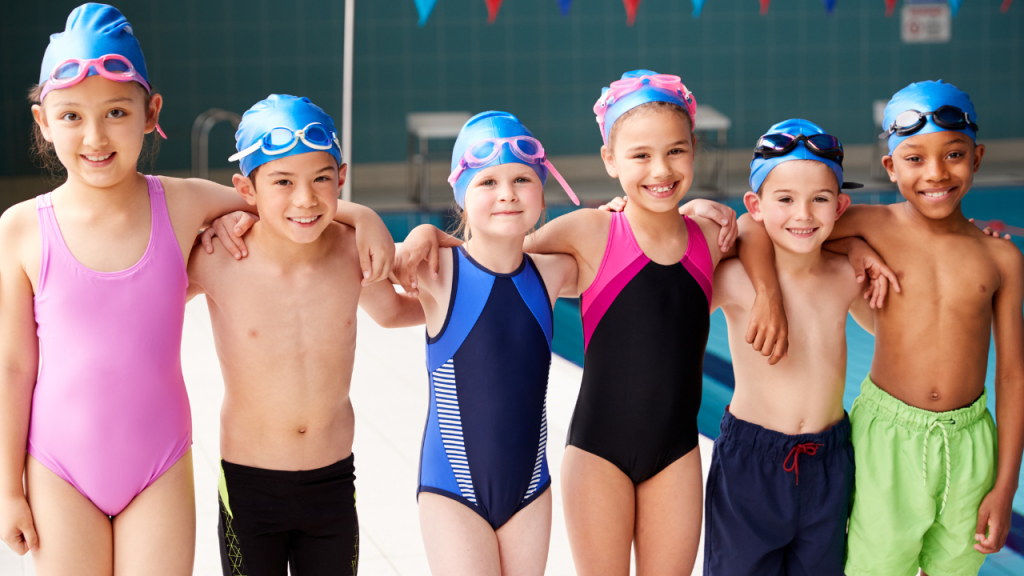
These exercises begin with gentle whole-body movement before focusing on the shoulders, torso, legs and ankles. They are suitable for many school-aged children and beginner swimmers, with simpler movements and fewer repetitions for younger children.
The suggested durations and repetitions are starting points rather than strict requirements. Each movement should remain comfortable, and children can stop or take a break whenever necessary.
1. Marching on the Spot
Suggested duration: 45–60 seconds
Stand upright and begin marching on the spot, lifting one knee at a time while swinging the arms naturally. Start slowly, then gradually increase the pace without breaking into a run. Keep the upper body relaxed, look forwards and place each foot gently on the ground.
Marching is a useful first activity after sitting or resting because it gets the legs moving without requiring complicated coordination. Most children can follow the movement with minimal instruction, making it suitable for the beginning of a warm-up.
Tips: Younger children can march to a rhythm or copy a parent’s movements to make the exercise more engaging. Avoid lifting the knees excessively or stomping, which adds unnecessary effort. Choose a dry, non-slip surface with enough room to move safely.
2. Arm Circles
Suggested repetitions: 5–8 circles in each direction
Extend both arms out to the sides at shoulder height and begin making small circles forwards. Gradually increase their size, then reverse the direction. Keep the elbows relaxed and avoid lifting the shoulders towards the ears.
Begin with smaller movements, particularly if the shoulders feel stiff after sitting. The circles can become slightly larger as the movement feels easier, but there is no need to extend beyond a comfortable range.
Tips: If children find it difficult to coordinate both arms, let them practise one at a time before trying both together. Encourage smooth circles instead of fast swinging movements, and reduce the range or stop if any shoulder discomfort develops.
3. Shoulder Rolls and Overhead Reaches
Suggested repetitions: 5 shoulder rolls in each direction, followed by 5 overhead reaches
Begin by gently lifting both shoulders towards the ears, rolling them backwards and relaxing them down. Repeat forwards before reaching one arm overhead at a time. Keep the body upright and avoid leaning sideways or arching the lower back.
The overhead reach introduces a position commonly used when children learn to glide through the water. Encourage them to extend the arm naturally, then bring it down before switching sides.
Tips: Ask children to imagine reaching towards the ceiling without standing on their toes. The movement does not need to be large to be useful. Avoid pulling the arms backwards or forcing a stretch, especially if overhead movement feels uncomfortable.
4. Gentle Torso Rotations
Suggested repetitions: 6–8 rotations
Stand with the feet comfortably apart and the knees slightly relaxed. Slowly turn the shoulders and upper body to one side, return to the centre and repeat in the opposite direction. Allow the arms to follow naturally without swinging them forcefully.
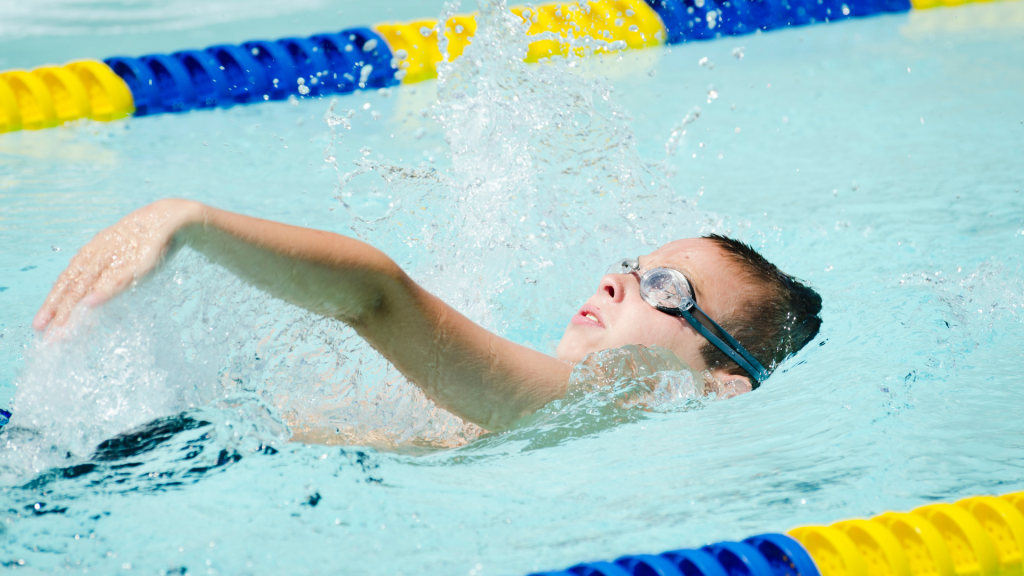
Keep the feet stable and rotate only as far as the body moves comfortably. This introduces the turning action used during strokes such as freestyle and backstroke without requiring children to coordinate their arms, legs and breathing at the same time.
Tips: For younger children, ask them to look towards a parent standing slightly to either side, then turn back to the centre. Avoid twisting deeply or moving quickly enough to lose balance. Small, smooth rotations are sufficient.
5. Bodyweight Squats
Suggested repetitions: 6–10 squats
Stand with the feet approximately shoulder-width apart and toes pointing slightly outwards if comfortable. Bend the hips and knees as though sitting down on a chair, then return to standing. Keep the heels on the ground and allow the knees to move in the same direction as the toes.
Start with a shallow squat before increasing the depth if balance and coordination allow. Children should be able to lower and raise themselves steadily without dropping suddenly or using momentum.
Tips: Younger children can practise smaller knee bends, while those who struggle with balance can hold a stable support. Avoid rushing through repetitions, lifting the heels or squatting so deeply that the child cannot return to standing comfortably.
6. Heel Raises and Ankle Movements
Suggested repetitions: 8–10 heel raises, followed by gentle ankle movements
Stand upright with the feet comfortably apart and hold a stable support if necessary. Slowly lift both heels off the ground, pause briefly and lower them again. Afterwards, raise one foot slightly and move the ankle gently up and down before switching sides.
The movement should remain relaxed, with no need to rise as high as possible. During the ankle exercises, encourage children to move their feet freely rather than holding them stiffly in one position.
Tips: Avoid bouncing during heel raises or forcing the toes into a pointed position. Children who struggle with standing balance can complete the ankle movements while seated, allowing them to concentrate on moving each foot smoothly.
7. Gentle Movement in the Water
Suggested duration: 1–2 minutes
Once in the pool, begin with activities suited to the swimmer’s current ability. Beginners can walk through shallow water, practise gentle kicking while holding the pool wall or repeat familiar supported movements. Children who already swim independently can begin with a short, relaxed length.
Start at an appropriate depth and allow time to settle into movement. The first activity should be something the child already understands, so they can focus on moving comfortably before the main lesson begins.
Tips: Avoid fast laps, prolonged breath-holding or unfamiliar underwater exercises during the warm-up. Children should only enter the pool when permitted and remain under appropriate supervision, following their instructor’s guidance throughout the activity.
How to Adjust Swimming Warm-Ups for Different Ages and Abilities
The same warm-up will not suit every child. Age, coordination, physical fitness and swimming experience all influence which exercises are appropriate and how much preparation is needed.
Preschool Children
Preschoolers generally respond better to short, familiar movements than a long sequence of formal exercises. Marching, reaching overhead and shallow knee bends can be introduced through simple games or by asking children to copy an adult.
At this age, keeping movements manageable and maintaining attention matters more than completing a specific number of repetitions. Babies and younger toddlers require a different approach, with age-appropriate activities guided by their instructor and direct support from a parent or carer in the water.
Beginner Swimmers
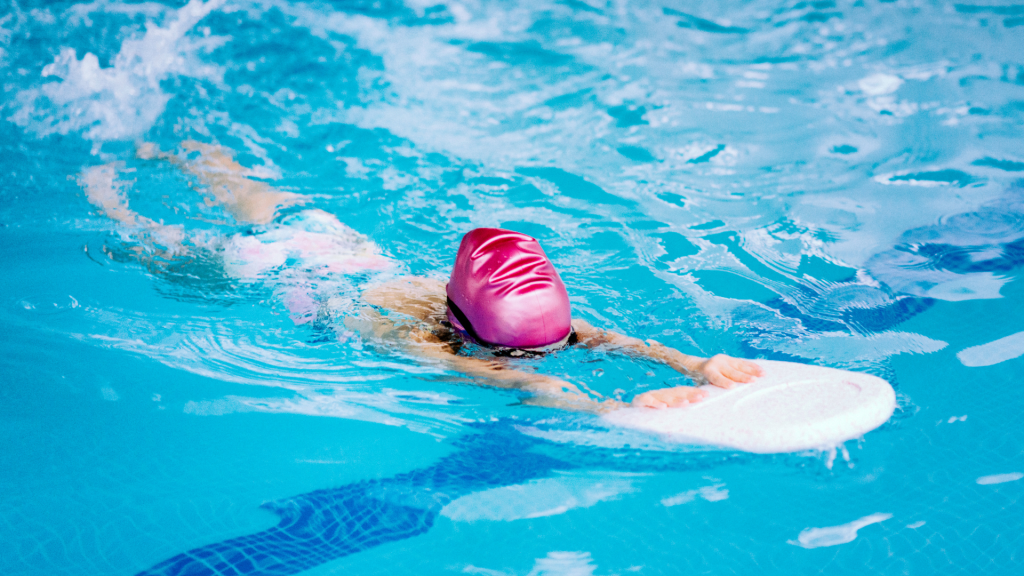
Children learning to float, kick or coordinate basic strokes benefit from exercises that prepare the body without requiring advanced technique. Arm circles, overhead reaches and ankle movements can introduce actions they will later practise during swimming lessons.
For children who feel hesitant about entering the pool, familiar exercises can also create a predictable start. However, developing water confidence requires guided practice of skills such as breathing, floating, body control and independent movement.
More Experienced Swimmers
Children who already swim independently can include more swimming-specific activities in their preparation. Easy freestyle or backstroke lengths, controlled kicking and gradual increases in pace may be appropriate before a longer training session.
These movements prepare the body for repeated strokes and greater physical demands. As swimming ability improves, warm-ups can become more specific to the swimmer’s training without becoming unnecessarily long or intense.
Safety Tips for Warming Up Before Swimming
Warm-up exercises should be completed where children have enough space to move without slipping or coming into contact with others. A routine that works well at home may need to be shortened or adjusted around a busy aquatic centre.
Choose a dry, even surface for standing exercises and avoid running, jumping or fast changes of direction near the pool edge. If there is no suitable space at the facility, complete the land-based exercises at home and follow the instructor’s directions once the lesson begins.
Movements should remain gentle and pain-free. If a child experiences pain, dizziness or unusual discomfort, stop the activity and allow them to rest. A warm-up is intended to prepare the body for exercise, not test strength or flexibility.
Active adult supervision is essential before, during and after swimming. Royal Life Saving Australia recommends keeping children aged 0–5 and non-swimmers within arm’s reach. Children aged 6–10 and weak swimmers require close supervision with constant visual contact.
Parents should also follow the pool’s safety rules and their child’s instructor regarding water entry and suitable activities. Completing land-based exercises independently does not mean a child is ready to swim without supervision.
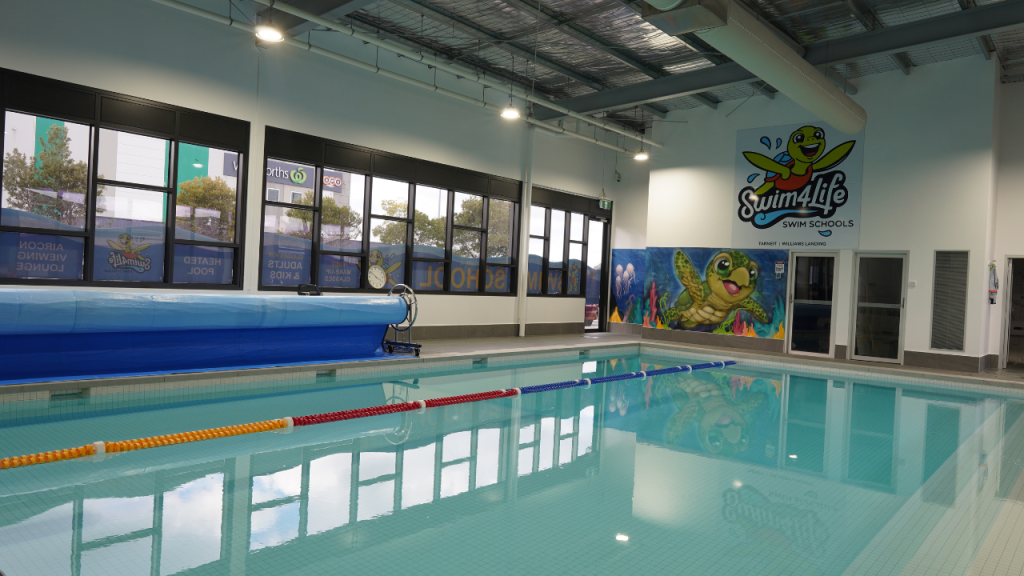
Build Swimming Skills at Swim4Life
A short warm-up prepares children for their time in the pool, while regular swimming lessons help them develop breathing, floating, kicking and stroke skills through guided practice.
Swim4Life offers beginner swimming lessons and programs for developing swimmers at Tarneit and Williams Landing. With small classes of 3–4 swimmers, qualified instructors and warm 32°C magnesium mineral pools, children can practise skills suited to their current ability while receiving individual guidance throughout their lessons.
Both locations feature purpose-built pools with multiple depth levels and gradual step entry. This allows beginners to develop foundational skills at an appropriate depth before progressing towards more challenging swimming activities.
Families around Werribee, Hoppers Crossing, Truganina and Wyndham Vale can explore swimming lessons in Tarneit. Those based near Point Cook, Laverton and Altona can consider swimming lessons in Williams Landing.
Through structured lessons, smaller classes and regular instructor feedback, Swim4Life gives children the support they need to strengthen their swimming skills and progress at a manageable pace.
FAQs About Swimming Warm-Up Exercises
Do Kids Need to Warm Up Before Swimming Lessons?
A short warm-up helps children prepare for the movements involved in swimming and settle into the activities ahead. Instructors may already include gentle warm-up activities at the beginning of lessons, so parents can keep any additional preparation brief.
How Long Should Beginners Warm Up Before Swimming?
Around five minutes is a practical starting point for a short beginner session, although there is no fixed duration for every swimmer. Younger children may need less time, while more experienced swimmers preparing for longer sessions may benefit from additional warm-up activities.
Can Children Warm Up Without Swimming Laps?
Yes. Marching, arm circles, shallow squats and ankle movements can prepare the body before entering the pool. Children who cannot yet swim independently can begin with familiar supported activities in the water instead of attempting full lengths.
Is Stretching Enough Before Swimming?
Stretching alone does not gradually increase physical activity in the same way as a dynamic warm-up. Gentle movements involving the shoulders, torso and legs are generally more useful before swimming, with comfortable stretching included where appropriate.
Should Young Children Complete All Seven Exercises?
Not necessarily. Preschoolers may only need a few familiar movements, particularly if their swimming lessons already include warm-up activities. The routine should reflect the child’s age, coordination, attention span and physical ability.
Can Children Warm Up at Home Before Swimming Lessons?
Yes. Simple exercises such as marching, arm circles and shallow squats can be completed at home if there is enough space. After travelling to the pool, a few gentle movements closer to the lesson may still help children prepare, provided the facility has a safe area available.