There is no single best age to learn to swim. Babies can begin parent-supported swimming lessons from around six months, while children aged three to five are generally better prepared to develop independent swimming skills.
The right time depends on your child’s development and learning goals. Whether you want to introduce water early or help an older child become a confident swimmer, each age offers different opportunities.
What Age Should Children Start Swimming Lessons?
Children can begin swimming lessons at different ages depending on what they are ready to learn. Younger children focus on water familiarity and supported movement, while preschoolers gradually develop independent swimming skills.
| Age Group | Learning Goal | Suitable Skills and Activities |
| Under 6 months | Gentle water familiarity at home | Supported bathing, gentle water contact and familiar interaction |
| 6–18 months | Early water experiences with parent support | Supported movement, floating activities and water play |
| 18 months–3 years | Developing coordination and water awareness | Blowing bubbles, supported kicking, floating and moving towards the pool edge |
| 3–5 years | Building independent swimming skills | Breath control, floating and recovery, gliding and basic propulsion |
| 5+ years | Improving technique and endurance | Swimming strokes, coordinated breathing, longer distances and water-safety skills |
These ages are guides, not fixed milestones. A child who starts lessons at four may need to practise basic floating, while another of the same age may already be learning strokes. The most appropriate class should reflect both age and current swimming ability.
What Can Children Learn at Each Age?
Swimming skills develop as children gain coordination, body control and the ability to follow instructions. Knowing what to expect at each stage helps parents recognise progress and choose activities their child can manage.
Under 6 Months: Gentle Water Familiarity
For babies younger than six months, bath time is a suitable opportunity for gentle water experiences. Parents can use familiar activities such as washing, talking and singing while securely supporting their baby’s head, neck and body.
There is no need to introduce swimming techniques at this age. Keep activities brief and comfortable, without forced submersion or unsupported floating. Parents can also explore when babies can start swimming lessons to understand what formal infant programs involve.
6–18 Months: Parent-Supported Swimming Activities
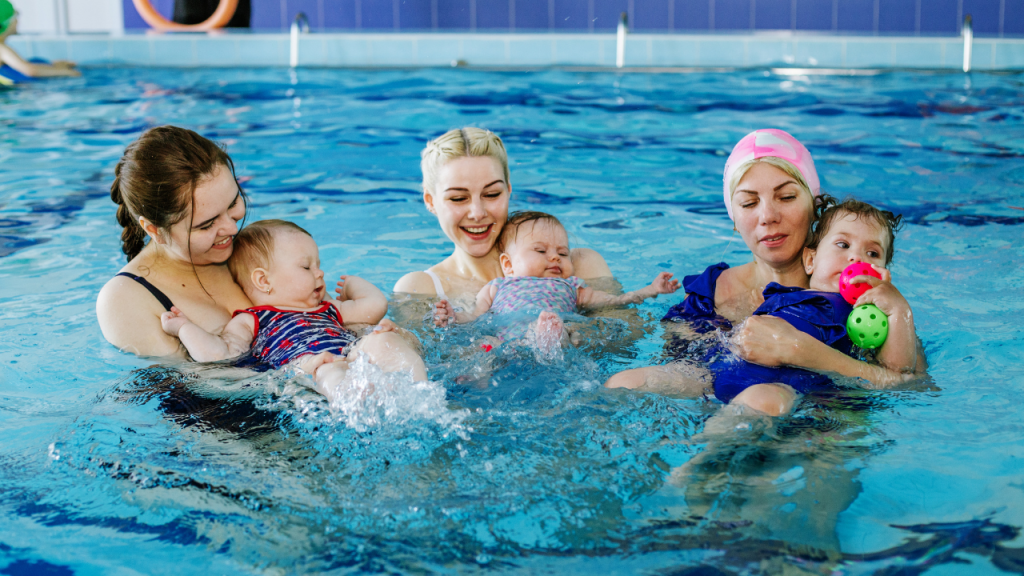
From around six months, babies can join programs that introduce water through songs, gentle movement and supported floating. Parents or carers remain in the pool, holding and guiding their baby during activities led by an instructor.
Progress may mean becoming more settled in the pool, responding comfortably to familiar movements or enjoying supported activities. These are appropriate early experiences, although babies cannot be expected to swim independently or protect themselves in an emergency.
18 Months–3 Years: Developing Water Awareness
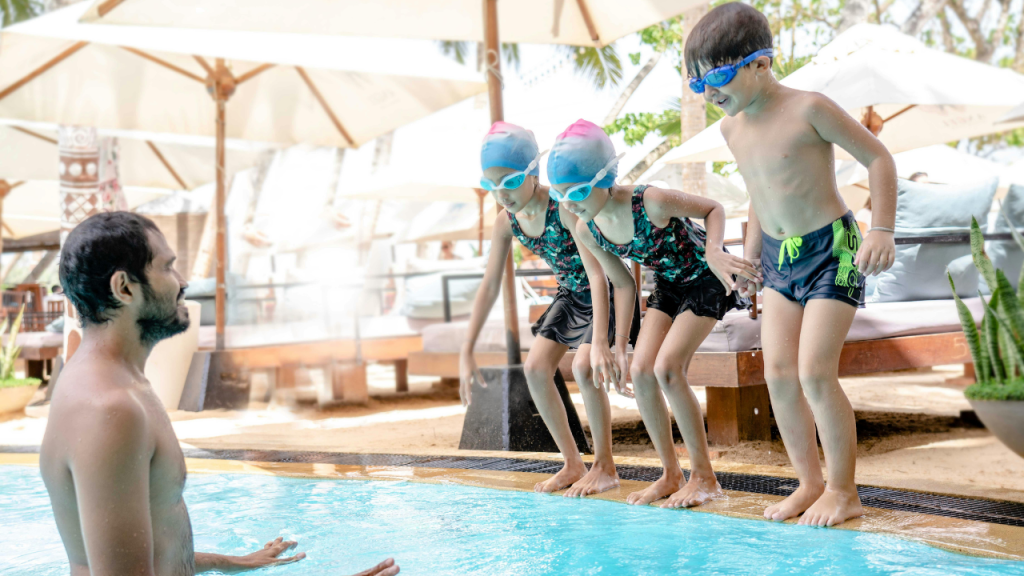
Toddlers can begin practising more purposeful movements, including supported kicking, blowing bubbles and moving towards the pool edge. Lessons also introduce simple safety routines, such as waiting before entering the water and holding onto the wall.
For example, a toddler may initially need help maintaining their grip on the pool edge before gradually moving along it with less assistance. These activities develop coordination and familiarity with water, but toddlers still require close adult supervision.
3–5 Years: Building Independent Swimming Skills
Preschool children are generally better prepared to combine breathing, floating and kicking into basic swimming movements. Lessons can gradually introduce gliding, floating independently and recovering to a standing position before progressing towards introductory strokes.
For example, a child who can float comfortably may begin practising controlled kicking to move forwards. If breathing remains difficult, the instructor can focus on blowing bubbles and exhaling underwater before combining these skills.
The Royal Life Saving Preschool Swim and Survive program follows a progressive approach to developing foundational swimming and water-safety skills.
Is Six Months a Good Age to Start Swimming Lessons?
Six months is a suitable starting option for families who want to introduce water early. At this age, parent-supported classes provide opportunities for gentle movement, familiar interaction and getting used to the pool environment.
Swimming activities can complement a baby’s early development by offering opportunities for movement, coordination and parent–child interaction. However, there is insufficient evidence to conclude that starting at six months guarantees faster physical or cognitive development.
Research discussed by Royal Life Saving Australia suggests that children begin mastering basic aquatic movement skills at around four years of age, regardless of when they first attended lessons. Starting early can provide valuable experiences, but it does not necessarily mean a child will learn to swim independently sooner.
For parents who want to support their child’s water familiarity from an early age, lessons from six months can form part of a gradual learning pathway. Families who prefer to start later can still help their children develop strong swimming skills through suitable instruction and regular practice.
Is Three, Four or Five Too Late to Start Swimming Lessons?
No. Children can begin swimming lessons at three, four or five without having attended baby or toddler classes. Preschoolers are often better able to follow instructions and coordinate the movements needed for basic swimming.
A four-year-old with no previous experience may start with blowing bubbles, floating and kicking before learning to glide. Another child of the same age may already be ready for introductory strokes, depending on their existing skills.
For families whose main goal is independent swimming rather than early water familiarity, the preschool years can be a suitable time to begin. Children should start at a level that matches their current ability instead of being rushed to catch up with others.
How to Choose the Right Swimming Program
A suitable swimming program should match your child’s learning goals, previous experience and level of independence. Beyond age, consider how instructors introduce new skills and whether the class allows children to progress at a manageable pace.
For babies, look for parent-supported classes that introduce water through gentle activities. Preschoolers benefit from a clear progression between breathing, floating, kicking and basic swimming movements, with enough instructor attention to address individual difficulties.
For example, a child who avoids putting their face underwater may need more breathing practice before learning strokes. Building water confidence through familiar movements and gradual instruction is more useful than pushing them towards harder activities too quickly.
Why Consistent Lessons Matter
Starting early provides opportunities for water experience, but consistent learning is more important than the starting age alone. Skills introduced during infancy need to develop further through toddler, preschool and school-age lessons before children become capable swimmers.
For many families, one lesson per week is a practical starting point. The appropriate swimming lesson frequency depends on your child’s progress and opportunities for safe practice.
The National Swimming and Water Safety Framework establishes progressive benchmarks at ages six, twelve and seventeen, highlighting that swimming development extends beyond learning basic strokes. Even as children become more capable, swimming lessons never replace active adult supervision around water.
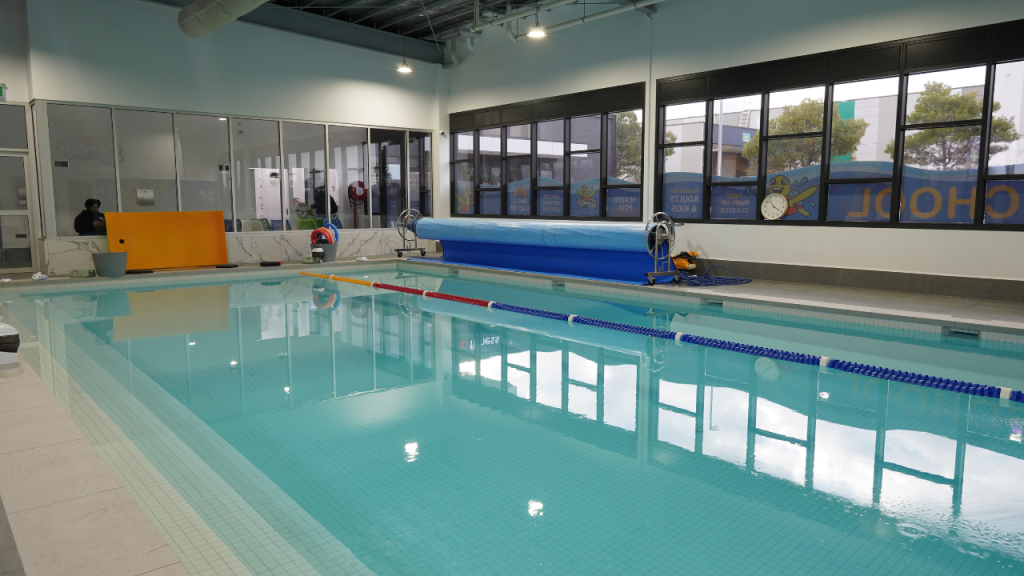
Age-Appropriate Swimming Lessons at Swim4Life
Swim4Life offers swimming programs at Tarneit and Williams Landing, with lessons suited to different ages and abilities.
The Baby & Toddler program starts from six months, introducing supported water activities with parents or carers in the pool. From three years of age, beginner swimming lessons focus on breathing, floating, kicking and foundational swimming skills.
Both locations offer small classes of 3–4 swimmers, qualified instructors and warm 32°C magnesium mineral pools. Purpose-built pools with multiple depth levels and gradual step entry allow children to practise at an appropriate depth as they develop new skills.
Families around Werribee, Hoppers Crossing and Truganina can explore swimming lessons in Tarneit, while those near Point Cook, Laverton and Altona can consider swimming lessons in Williams Landing.
Whether your goal is early water familiarity or developing independent swimming skills, Swim4Life can help identify a suitable starting class based on your child’s age and current ability.
FAQs About the Best Age to Learn to Swim
Should Babies Start Swimming Lessons at Six Months?
Six months is a suitable option for families wanting an early introduction to water. Lessons at this age should involve direct parent or carer support and activities designed for infants, without expecting independent swimming.
Will Starting Swimming Lessons Early Help My Child Learn Faster?
Not necessarily. Early lessons provide opportunities for water familiarity and supported movement, but independent swimming depends on physical development, coordination and practice. Children who start later can still develop strong swimming skills.
What Age Can Children Swim Without Their Parents in the Pool?
Many preschool programs introduce instructor-led lessons from around three years of age. Whether a child is ready depends on their ability to follow instructions, manage unfamiliar activities and participate with appropriate instructor support.
How Long Should Children Continue Swimming Lessons?
Children should continue developing their swimming and water-safety skills beyond learning basic strokes. The appropriate duration depends on their progress towards practical skills, including floating, swimming longer distances and responding to different aquatic situations.