Swim workouts help you build stamina, improve cardiovascular fitness and make better use of your time in the pool. Whether you’re returning to swimming or looking for more variety, a structured workout gives you a clear plan without having to swim continuously.
Here are three practical swimming workouts for different fitness levels, with distances, rest periods and simple ways to progress.
Which Swim Workout Is Right for You?
The right workout depends on how comfortably you can swim, not how fit you are outside the pool. Start with a distance you can manage while maintaining controlled breathing and consistent technique.
| Swimming Level | Workout Distance & Time | Main Goal |
| Beginner | 200m (approx. 10–20 minutes) | Build water confidence and practise controlled breathing |
| Intermediate | 500m (approx. 20–35 minutes) | Improve swimming stamina and maintain a steady pace |
| Experienced | 1,000m (approx. 30–50 minutes) | Build cardiovascular endurance and improve pace control |
These workouts are designed for a 25-metre pool. Beginners should be able to swim at least 25 metres independently, intermediate swimmers should manage 50 metres comfortably, and experienced swimmers should be capable of repeating 100-metre swims with good technique.
The estimated times include short recovery breaks but will vary with your swimming speed and fitness. You can reduce the number of repeats or rest longer when needed, especially during your first few sessions.
3 Swim Workouts for Beginner to Experienced Swimmers
Each workout includes an easy warm-up, a main set and a cool-down. Swimming sets are written as repeats, so 4 × 25m means swimming 25 metres four times, with recovery between each length.
1. Beginner Swim Workout: Build Confidence and Breathing Control (200m)
Best for: Adults returning to swimming or those who can swim 25 metres but become tired over longer distances.
This beginner swim workout combines short lengths with breathing-focused practice. The aim is to become comfortable repeating manageable distances without rushing or losing control of your stroke.
| Workout Stage | Swimming Set | Pace & Rest |
| Warm-up | 2 × 25m easy swim (50m) | Easy pace, 30–60 sec rest |
| Breathing practice | 2 × 25m controlled swimming (50m) | Focus on smooth breathing, rest as needed |
| Main set | 2 × 25m steady swim (50m) | Comfortable pace, 30–60 sec rest |
| Cool-down | 2 × 25m relaxed swim (50m) | Easy pace, rest as needed |
| Total | 200m | 8 pool lengths |
During the breathing practice, use a stroke you can perform comfortably. If you’re swimming freestyle, focus on exhaling gently while your face is in the water and taking a breath as your body turns, without deliberately holding your breath between strokes.
Keep a similar pace during both lengths of the main set. If your breathing becomes rushed or your technique starts to deteriorate, take a longer break rather than pushing through fatigue.
Make it easier: Start with 100 metres by completing one 25-metre length for each stage. Once you can finish 200 metres comfortably, add two more 25-metre repeats to gradually increase your workout to 250 metres.
2. Intermediate Swim Workout: Improve Stamina and Consistency (500m)
Best for: Swimmers who can comfortably swim 50 metres and want to build endurance without increasing intensity too quickly.
This workout alternates steady swimming with easier lengths, allowing you to maintain your effort over a longer session. The goal is to develop stamina while keeping your breathing and stroke technique consistent.
| Workout Stage | Swimming Set | Pace & Rest |
| Warm-up | 4 × 25m easy swim (100m) | Easy pace, 20–30 sec rest |
| Main set | 3 × 50m steady swim + 3 × 50m easy swim, alternating (300m) | Moderate/easy pace, 20–40 sec rest |
| Cool-down | 4 × 25m relaxed swim (100m) | Easy pace, rest as needed |
| Total | 500m | 20 pool lengths |
Begin the main set with 50 metres at a steady, comfortable pace, then follow with 50 metres of easier swimming. Repeat this pattern three times, using the easier lengths to recover while continuing to move.
Try to maintain a similar pace across all three steady repeats. If the final repeat feels significantly harder than the first, slow down slightly or extend your rest periods during the next session.
Make it easier: Complete two rounds of the main set instead of three, reducing the workout to 400 metres. When 500 metres becomes manageable, focus on maintaining a consistent pace before increasing the total distance.
3. Experienced Swim Workout: Build Endurance and Pace Control (1,000m)
Best for: Regular swimmers who can complete repeated 100-metre swims and want a more challenging fitness session.
This workout combines longer steady swims with shorter, faster efforts. Rather than trying to swim every length quickly, you’ll practise maintaining a comfortable pace and increasing your effort when appropriate.
| Workout Stage | Swimming Set | Pace & Rest |
| Warm-up | 4 × 50m easy swim (200m) | Easy pace, 20–30 sec rest |
| Endurance set | 4 × 100m steady swim (400m) | Moderate pace, 20–30 sec rest |
| Pace set | 4 × 50m brisk swim (200m) | Brisk but controlled, 30–45 sec rest |
| Cool-down | 4 × 50m relaxed swim (200m) | Easy pace, rest as needed |
| Total | 1,000m | 40 pool lengths |
During the endurance set, aim to complete each 100-metre repeat at a similar pace. You should feel challenged but still able to maintain your body position, breathing rhythm and stroke coordination.
For the 50-metre pace set, swim slightly faster than your usual steady pace without turning each repeat into an all-out sprint. If your technique deteriorates, reduce the intensity or allow more time to recover before continuing.
Make it easier: Complete two 100-metre endurance repeats instead of four, bringing the workout to 800 metres. Once the full session feels manageable, focus on more consistent pacing or slightly shorter recovery periods before adding distance.
How to Adjust Swim Workouts for Your Fitness Goals
The most effective swimming workout is not necessarily the longest one. You can adjust distance, intensity and technique practice depending on which aspect of fitness you want to improve.
To Build Swimming Endurance
Focus on increasing the distance you can swim at a comfortable pace. For example, if you can complete several 25-metre lengths without difficulty, gradually introduce 50-metre repeats while allowing enough recovery between them.
Keep the pace manageable as you increase distance. Swimming slightly further with controlled breathing is more useful than completing a longer set that leaves you exhausted.
To Improve Cardiovascular Fitness
Once you can maintain a steady swimming rhythm, try alternating moderate and slightly faster efforts. An intermediate swimmer could complete 25 metres at a brisk pace followed by 25 metres of relaxed swimming, repeating the pattern with recovery as needed.
This introduces changes in intensity without requiring maximum effort throughout the workout. The faster lengths should feel challenging while still allowing you to maintain good technique.
To Improve Swimming Technique
If you become tired quickly despite having reasonable general fitness, breathing or body position may be making swimming more difficult than necessary. Spending part of your workout practising a specific movement can help you develop a more efficient stroke.
For example, lifting your head too high during freestyle breathing can cause your hips and legs to sink. Practising a gentle head turn with your body’s rotation and a steady underwater exhalation may help you maintain better alignment.
If breathing is your main difficulty, Swim4Life’s guide to how to breathe when swimming explains how to develop a smoother breathing rhythm.
How to Personalise Swim Workouts for Your Fitness Goals
Different fitness goals call for different approaches to swimming. Once you’ve chosen a workout that matches your ability, you can adjust its duration, intensity or strokes to get more from each session.
For Weight Management
When swimming for weight loss, increasing your overall activity is generally more useful than making every length faster. Start with the 200m or 500m plan and gradually add easy swimming lengths as your stamina improves.
For example, adding two 25m lengths increases your workout by 50m without requiring harder intervals. Swimming can contribute to energy expenditure, but weight management also depends on nutrition and overall activity levels.
For Heart Health and Endurance
To improve cardiovascular endurance, use intervals that alternate more demanding swimming with easier recovery. In the 500m workout, swim the steady 50m repeats at a slightly stronger pace while keeping the following 50m relaxed.
Experienced swimmers can use the 1,000m workout’s brisk intervals to challenge their fitness without increasing the total distance. Keep the faster efforts controlled so your breathing and technique remain consistent.
For Full-Body Conditioning
Swimming engages the arms, legs and core, with different strokes placing different demands on your muscles. If you’re comfortable with more than one stroke, replace some easy freestyle lengths with backstroke or breaststroke to vary the movements.
For example, alternate freestyle and backstroke during the 500m workout’s easy lengths while keeping the total distance unchanged. This adds variety to your full-body exercise routine, although swimming should complement dedicated strength training.
For Stress Relief and Mental Wellbeing
If you’re swimming to unwind, choose a relaxed pace rather than focusing on speed or personal records. You can replace brisk intervals with easy swimming, extend your warm-up or shorten the main set when you prefer a gentler session.
A comfortable swimming rhythm can make exercise more enjoyable and help relieve stress. The aim is to finish feeling refreshed rather than exhausted.
How Often Should You Swim for Fitness?
For beginners, two swim workouts per week can be a manageable starting point, with recovery time between sessions. Once your current workout feels comfortable, consider adding a third session or gradually increasing the distance rather than changing everything at once.
Swimming can contribute to the Australian Government’s physical activity recommendations, which include at least 30 minutes of moderate-to-vigorous activity on most days and muscle-strengthening activities twice weekly. Combine swimming with other suitable activities to support your overall fitness.
How to Get Better Results from Your Swim Workouts
Improving your swimming fitness requires more than increasing distance or speed. These three stages help you track your performance, develop better swimming technique and progress at a pace that matches your ability.
Stage 1: Assess Your Starting Level
Choose a swim workout that matches your current ability and assess how comfortably you can complete it. Record your swimming distance, rest periods and perceived effort to establish a baseline for tracking progress in future sessions.
Stage 2: Build Consistency and Refine Your Technique
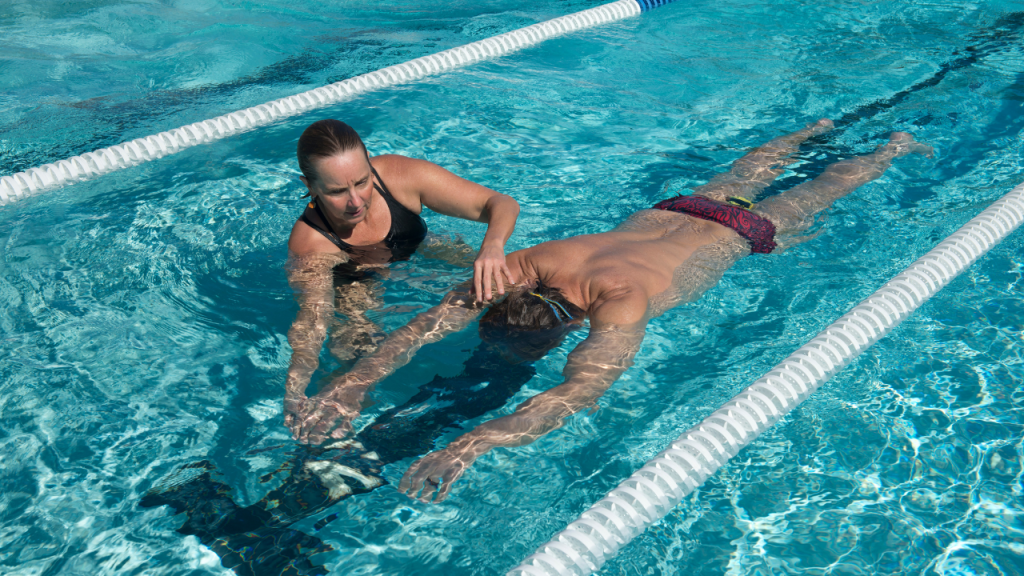
Repeat your chosen workout over several sessions, focusing on controlled breathing, smooth strokes and consistent pacing. Completing the same distance with less fatigue or shorter recovery periods can indicate improving stamina. If you struggle to maintain proper technique, guidance from experienced instructors through small-group swimming lessons can help identify specific weaknesses and provide personalised feedback.
Stage 3: Increase the Challenge Gradually
Once you can complete your workout comfortably with consistent technique, gradually increase the difficulty by adjusting one element at a time. Depending on your fitness goals, you might add a few lengths, shorten your rest periods or introduce slightly faster intervals. If your breathing or stroke control begins to deteriorate, return to your previous pace or distance until you can maintain good technique.
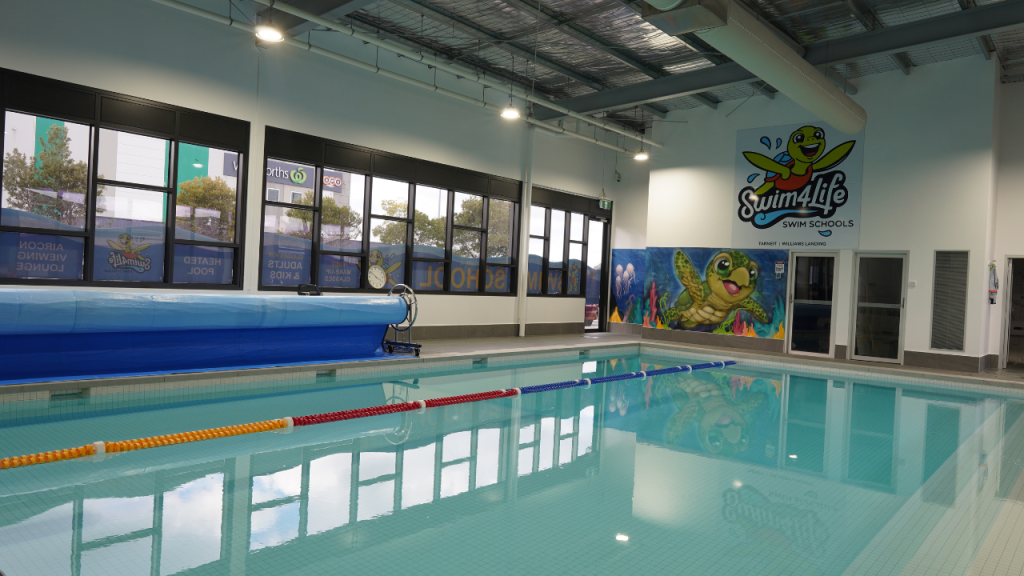
Personalised Adult Swimming Lessons in Tarneit & Williams Landing
If breathing difficulties, poor body position or inefficient strokes are limiting your swim workouts, Swim4Life’s adult swimming lessons provide personalised instruction to help you improve your technique and build swimming confidence.
For adults in Werribee, Hoppers Crossing, Truganina and Wyndham Vale, Swim4Life Tarneit offers small-group classes of up to four swimmers and private 1-on-1 lessons. Smaller classes give instructors more opportunities to observe individual movements and provide feedback, while private lessons allow swimmers to focus on specific challenges such as breathing control, stroke coordination and swimming efficiency.
Adults from Point Cook, Laverton and Altona Meadows can access the same personalised learning approach at Swim4Life Williams Landing. With flexible small-group and private lesson options, qualified instructors and purpose-built 32°C magnesium mineral pools, both locations provide a dedicated teaching environment for beginners, returning swimmers and adults working towards their fitness goals.
FAQs About Swim Workouts
What Is a Good Swim Workout for Beginners?
A 200m swim workout with short 25m repeats is a practical starting point for beginners who can already swim independently. Include easy swimming, breathing practice and regular rest periods to build stamina without becoming overly tired.
Is 20 Minutes of Swimming Enough for Fitness?
Yes, a 20-minute swimming session can contribute to improving your fitness, particularly when combined with regular physical activity. The benefits depend on your swimming intensity, current ability and how consistently you exercise.
Should I Swim Continuously or Take Breaks?
You don’t need to swim continuously to improve fitness. Breaking your workout into shorter sets with recovery periods helps you manage fatigue and maintain technique. As your endurance improves, you can gradually swim longer distances between breaks.
Which Swimming Stroke Is Best for Fitness Workouts?
Freestyle is commonly used for fitness swimming because it allows swimmers to maintain a steady pace over longer distances. However, breaststroke and backstroke can also provide effective exercise, so choose strokes you can perform comfortably and with good technique.
Can I Follow These Swim Workouts in a 50-Metre Pool?
Yes, but you’ll need to adjust the shorter sets because these workouts are designed for a 25m pool. Intermediate and experienced swimmers can use 50m and 100m repeats, while beginners who cannot safely swim 50m continuously should use a shorter pool.