

Water confidence develops when children understand how to manage common experiences in the pool, including submersion, floating, breathing and independent movement. Familiarity with these skills provides children with clear responses when they lose their footing, get water on their face or encounter a depth they are not accustomed to.
Confidence alone cannot replace swimming ability. Effective water confidence combines controlled breathing, body awareness and practical swimming skills, allowing children to respond more deliberately when they begin to feel unsettled.
Why Do Children Panic in the Water?
Children may become distressed when they encounter an aquatic situation they have not yet learned to manage, such as face immersion, losing contact with the pool floor, unsupported floating or moving into deeper water. These situations can trigger rushed breathing, muscular tension and uncoordinated movement, making familiar swimming skills harder to perform effectively.
A 2025 review of fear in swimming education identifies anxiety, panic and muscular tension as common responses associated with fear in aquatic environments. These reactions can interfere with breathing control, body position and movement, reinforcing the importance of addressing fear as part of swimming instruction.
How Does Water Confidence Help Children Stay in Control?
Water confidence provides children with practised responses they can apply when a situation becomes unfamiliar. Controlled breathing, floating, restoring body position and reaching a stable point in the pool create a clear sequence of actions that can reduce uncertainty.
Repeated practice reinforces these responses. As submersion, breathing, floating and independent movement become more established, children are better prepared to apply them under different conditions rather than relying solely on reassurance from an instructor or parent.
Which Swimming Skills Build Water Confidence?
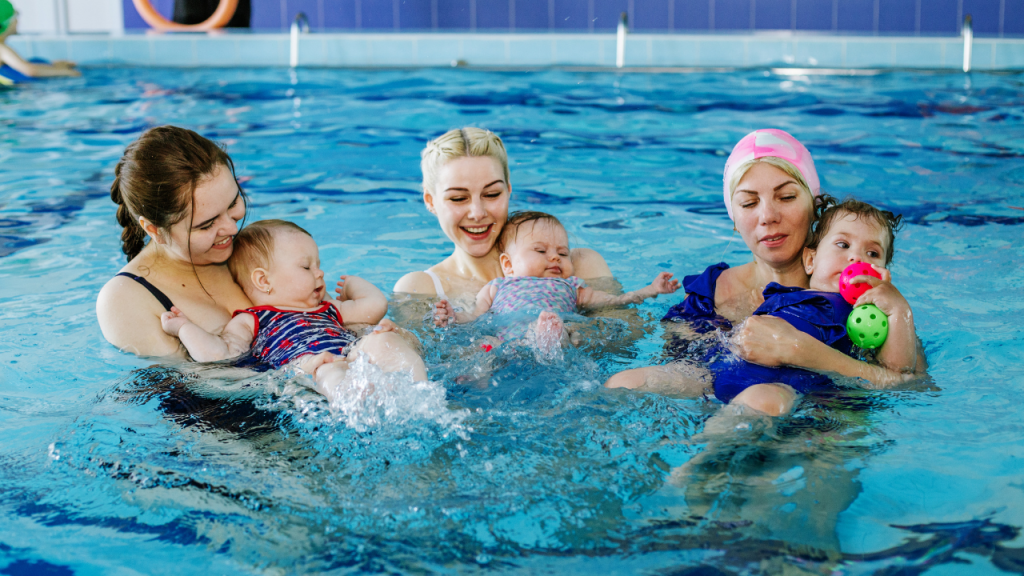
Water confidence develops through swimming skills that allow children to manage their breathing, body position and movement in different situations. Rather than judging confidence by how comfortable a child appears in the pool, parents and instructors can look at whether fundamental skills are becoming more controlled and independent.
Key skills include:
- Breath control: exhaling into the water and recovering breathing without rushing.
- Submersion: placing the face and head underwater while maintaining breathing control.
- Floating: maintaining a stable body position with progressively less physical support.
- Body orientation: moving between front, back and upright positions while maintaining control.
- Independent movement: travelling away from the wall using controlled kicking and basic propulsion.
- Recovery and water-safety skills: regaining a stable position, orientating towards a safe point and reaching the pool edge when required.
Together, these skills establish the practical foundation behind water confidence. As children perform them with greater consistency and less physical assistance, they become better prepared to manage unfamiliar situations in the water.
Why Water Confidence and Swimming Skills Need to Develop Together
Comfort in the water should develop alongside practical swimming ability. Children require skills such as breath control, floating, propulsion, body orientation and safe entry and exit to manage situations where they cannot stand or where their body position changes unexpectedly.
Royal Life Saving Australia’s National Swimming and Water Safety Framework recognises confidence and competence as complementary components of swimming development. Effective instruction therefore builds confidence through skills children can perform independently and with increasing consistency.
Signs Your Child Is Developing Water Confidence
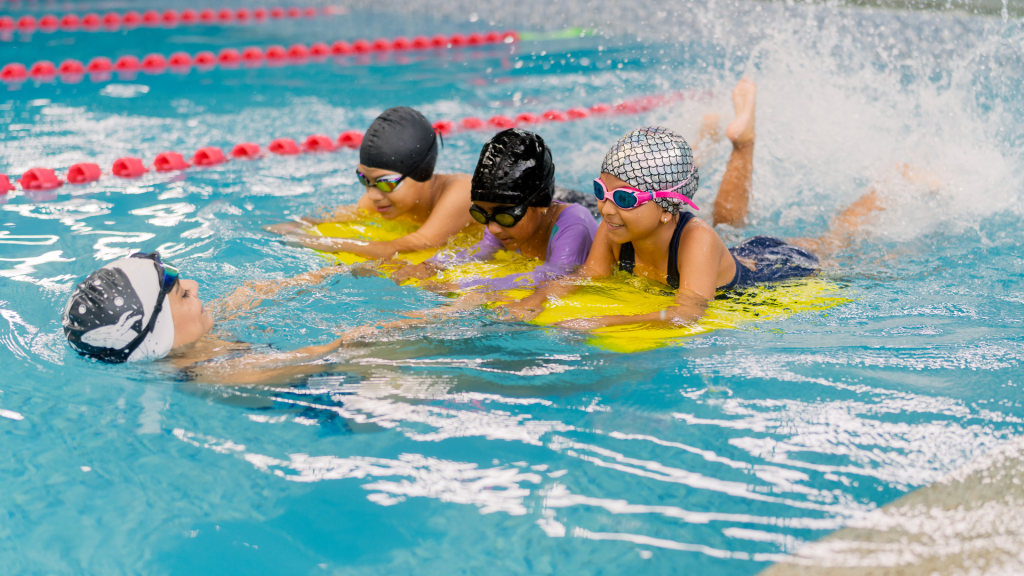
Water confidence is best assessed through how a child responds during swimming activities rather than how enthusiastic they appear in the pool. Parents and instructors may notice progress when a child:
- Submerges their face with less hesitation.
- Maintains controlled breathing during activities.
- Holds a floating position with less physical assistance.
- Moves away from the pool edge more independently.
- Recovers body position after splashes or brief submersion.
- Attempts familiar skills with less reassurance.
- Responds to instructor cues during unfamiliar activities.
These behaviours provide clear indicators that confidence is developing alongside swimming ability, particularly when they become more consistent across different lessons and activities.
How Swimming Lessons Build Water Confidence
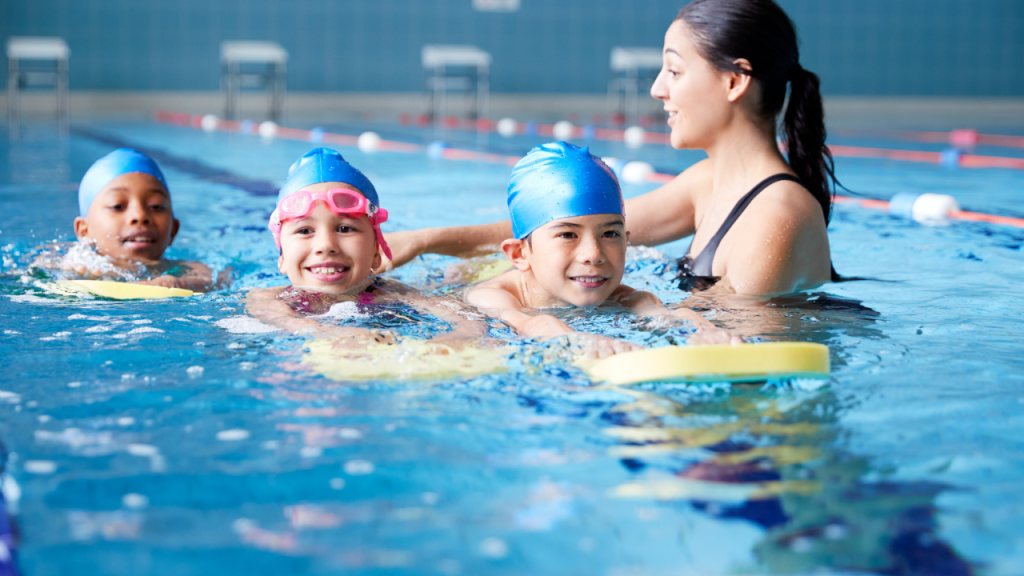
Structured swimming lessons develop confidence through repeated practice of core skills before introducing more complex movements. Breath control and face immersion typically form the foundation for floating, kicking and propulsion, allowing children to progress through a logical sequence of swimming skills.
For nervous swimmers, establishing each foundation before progressing reduces unnecessary difficulty and allows instructors to identify where additional repetition is required. Parents can also refer to Swim4Life’s guide on helping children overcome a fear of water and swimming for strategies focused specifically on water-related fear.
Why the Lesson Environment Matters for Nervous Swimmers
Nervous swimmers often require closer observation, additional repetition and more time to consolidate individual skills. Instructors need sufficient opportunity to identify changes in breathing, body tension, hesitation and technique before deciding when a swimmer is ready to progress.
Swim4Life’s small swimming classes allow instructors to monitor individual performance more closely and address specific skill gaps during each lesson. Where fear or a particular technique continues to restrict progress, one-on-one swimming lessons provide dedicated instruction in areas such as submersion, breathing, floating and independent movement.
Build Water Confidence Through Strong Swimming Foundations
Effective water confidence is built on practical swimming ability. Breath control, floating, body position and independent movement establish the responses children need when an activity becomes unfamiliar or more demanding.
At Swim4Life, lessons at Tarneit and Williams Landing focus on developing these swimming foundations alongside each child’s confidence and current ability. Small-group and one-on-one lessons provide different levels of instruction according to the swimmer’s skills and learning requirements.
FAQs About Water Confidence in Children
Can a Confident Child Still Panic in the Water?
Yes. Water confidence improves familiarity and control, but unexpected situations, fatigue or unfamiliar environments may still cause distress.
Can a Child Be Confident in Water but Have Limited Swimming Ability?
Yes. Comfort in the water and swimming competence are different measures, so skills such as breathing, floating, propulsion and recovery still require structured development.
Can Swimming Lessons Help a Child Who Is Afraid of Water?
Structured swimming lessons introduce submersion, breathing, floating and movement through progressive practice and instructor guidance. Children with significant fear may require additional repetition or individual instruction before advancing to more complex skills.