


Kicking is one of the first swimming skills children learn, but it can also be one of the hardest to get right.
Some children bend their knees too much. Some kick from the feet instead of the hips. Others kick very fast but do not move far in the water. If your child is learning to swim and their kicking looks messy, slow, or tiring, do not worry. This is very common. Good kicking takes time, practice, and patience. With the right support, children can learn to kick more effectively and feel more confident in the water.
Why Kicking Matters in Swimming
Kicking helps children move through the water, stay balanced, and maintain a better body position. It also supports confidence because children feel more in control when they can move forward independently.
In early swimming lessons, kicking is not only about speed. It is about helping children understand how their bodies move in the water. A strong and steady kick helps support floating, breathing, and stroke development later on. When children build good kicking habits early, they often find it easier to progress into skills such as freestyle and backstroke.
Why Children Struggle With Kicking
Many children bend their knees too much when they kick. This can make the kick look big and splashy, but it may not help them move efficiently through the water.
Some children also keep their legs too stiff, while others kick with their feet too high above the surface or let their legs sink too low. These are all common parts of learning to swim.
Children are still developing coordination, body awareness, and strength. They may understand what the instructor is asking, but their bodies need time to learn the movement. This is why repetition, patience, and gentle correction are so important.
A Parent’s Guide to Helping Your Child Kick Better
Improving your child’s swimming kick does not mean correcting every movement from the poolside. In most cases, children improve best when they receive clear guidance during lessons and gentle encouragement from parents outside the pool. The goal is to help your child feel relaxed, confident, and aware of what a good kick feels like.
1. Help Your Child Develop a Small, Steady Kick
A good swimming kick is usually smaller than children expect. Instead of large bicycle-style movements, children need to learn a steady flutter kick with relaxed legs.
You can explain it as making “little splashes” rather than big splashes. This helps children avoid bending their knees too much or kicking too widely.
The kick should come mostly from the hips, with soft knees and relaxed ankles. Children do not need to force the movement. The goal is to create a steady rhythm that helps them move forward without becoming too tired.
2. Help Your Child Keep Their Legs Near the Surface
Body position plays a big role in kicking. If your child’s legs sink too low, kicking becomes much harder. They may feel like they are working very hard but not moving much.
A better body position helps the legs stay closer to the surface. This allows the kick to become lighter and more effective.
In lessons, instructors often help children practise floating, gliding, and kicking with support. These skills help children understand where their bodies should sit in the water.
If your child is still learning, it is normal for their legs to drop sometimes. With practice, they will gradually build better balance and control.
3. Practise Kicking With Support
Children often improve their kicking when they can focus on the legs without worrying about everything else at the same time.
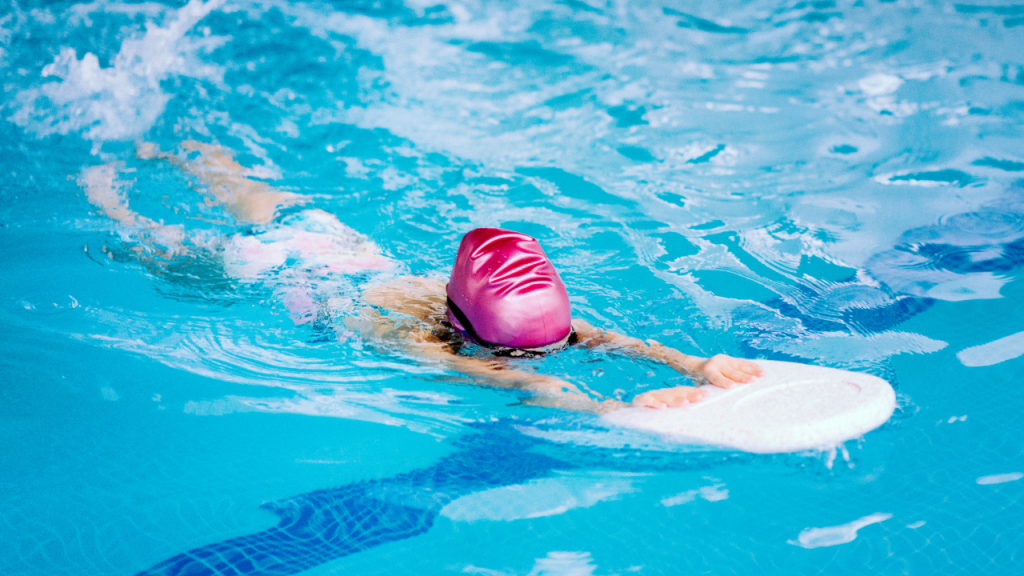
Using support from an instructor, a pool edge, or a suitable swimming aid during lessons can help children practise the movement more clearly. When they feel secure, they can concentrate on keeping their legs long, relaxed, and steady.
At home or outside of lessons, parents should avoid pushing technique too hard. Instead, keep practicing playfully and positively. Children are more likely to improve when they feel encouraged rather than corrected too often.
4. Help Your Child Stay Relaxed While Breathing
Sometimes kicking becomes difficult because a child is tense. If they are holding their breath, lifting their head too high, or feeling worried in the water, their legs may sink, and their kick may become less effective.
Breathing and relaxation are important parts of good kicking. When children feel calm, they can keep a better body position and move their legs more naturally.
This is why water confidence matters. A child who feels safe in the water is more likely to kick with rhythm and control.
5. Avoid Comparing Your Child to Others
Every child develops swimming skills at a different pace. Some children pick up kicking quickly, while others need more time to understand the movement. It can be tempting to compare your child with other swimmers in their class, but this is not always helpful. Your child may be building confidence, coordination, and strength in their own way.
Progress in swimming is not always instant. Sometimes a child may practise the same skill for several lessons before it suddenly starts to click. The most important thing is that they keep trying, stay positive, and receive the right guidance.
How Swimming Lessons Help Improve Kicking
Swimming instructors are trained to spot small technique issues that parents may not notice. They can see whether a child is bending their knees too much, kicking too wide, lifting their head, or losing body position.
In a structured swimming lesson, children can practise kicking in different ways. They may work on floating, gliding, supported kicking, back kicking, and eventually kicking with arm movements.
This progression helps children build the skill step by step. Instead of expecting the perfect kick straight away, lessons help children develop control, confidence, and coordination over time.
When Should Parents Consider Extra Support?
If your child has been attending lessons but still finds kicking very difficult, extra support may help.
This does not mean your child is failing. It may simply mean they need more time, more repetition, or more individual feedback.
A 1:1 swimming lesson can be helpful when a child needs focused attention on a specific skill. The instructor can spend more time working on body position, leg movement, and confidence in the water.
For some children, a short period of extra support can make a big difference to their progress.
Help Your Child Build Stronger Swimming Skills with Swim4Life
At Swim4Life, our swimming lessons help children build confidence, technique, and water safety skills step by step.
If your child is still learning to kick, our caring instructors can support them with patient guidance and age-appropriate teaching. We help children practise in a positive environment so they can feel more confident with every lesson.
Book a swimming lesson with Swim4Life today and help your child build stronger skills in the water.
Frequently Asked Questions
Why does my child bend their knees when kicking?
This is very common. Many children naturally kick from the knees before learning to kick from the hips. With practice and instructor guidance, they can learn a smaller and more effective flutter kick.
How can I help my child kick better in swimming?
Encourage small, steady kicks and help your child stay relaxed in the water. The best improvement usually comes from consistent lessons, proper body position, and regular practice.
Should swimming kicks make big splashes?
Not always. Big splashes can sometimes mean the kick is too large or coming too much from the knees. A good kick is usually steady, controlled, and relaxed.
How long does it take for children to improve their kicking?
Every child is different. Some improve quickly, while others need more time to build coordination and confidence. Consistent practice is the key.