

Six months is a common age to begin structured baby swimming lessons. At this stage, lessons focus on helping babies become familiar with the water through supported movement, floating, breathing preparation and simple aquatic activities rather than teaching independent swimming.
Swim4Life’s Baby & Toddler swimming program is designed for children aged 6–30 months, with a parent or carer actively involved in each lesson and supporting their child in the water.
Is 6 Months a Good Age to Start Swimming Lessons?
Six months is a recognised starting age for infant water familiarisation programs. Early lessons provide a gradual introduction to the pool while babies remain fully supported, without expecting them to float, submerge or swim independently.
Early swimming lessons introduce:
- Supported movement through the water, helping the pool environment become more familiar;
- Front, back and upright positions, introducing different body positions in water;
- Water around the face, through gradual and predictable activities;
- Simple breathing cues, used before face wetting; and
- Early kicking and arm movements, while adult support is maintained.
What Happens in a 6-Month-Old’s First Swimming Lesson?
Infant classes use short, age-appropriate activities rather than continuous swimming practice. The instructor demonstrates each movement and guides the parent or carer on how to provide the appropriate hold and level of support.
A typical lesson may include:
- Water familiarisation – settling into the pool while securely held.
- Supported movement – moving gently through the water.
- Front and back floating – experiencing buoyancy with full adult support.
- Breathing preparation – following a consistent cue before water reaches the face.
- Kicking and reaching – encouraging natural arm and leg movement while supported.
Activities can be adjusted according to how each baby responds, allowing new movements and positions to be introduced gradually.
What Is the Parent’s Role During Baby Swimming Lessons?
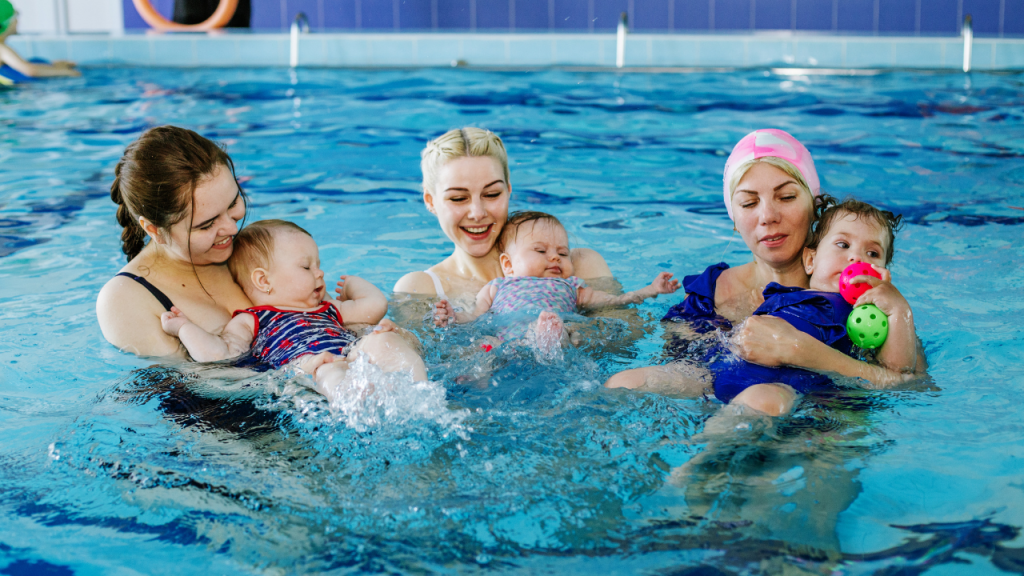
Parents and carers are actively involved in infant swimming lessons. The instructor leads the class, while the adult in the water provides the secure physical support needed for movement, floating and changes in body position.
Parents are guided to:
- Hold the baby securely during movement and floating;
- Move gradually between positions without removing support suddenly;
- Follow consistent cues during breathing and face-wetting activities;
- Recognise signs of comfort or hesitation; and
- Adjust physical support under the instructor’s guidance.
What Skills Do Babies Develop at 6 Months?
At six months, progress is better measured by familiarity and consistent responses than independent swimming. A baby may begin settling more easily into a supported float, responding to a familiar breathing cue or becoming more active during kicking activities.
| Early Skill | What are Activities in Class | Benefit |
| Water familiarisation | Babies are securely held and moved through the pool | Familiarity with the pool and water sensations |
| Supported floating | Front and back positions are practised with adult support | Buoyancy and horizontal body position |
| Body orientation | Babies experience upright, front and back positions | Awareness of changing body position in water |
| Breathing preparation | Consistent cues are introduced before water reaches the face | More predictable face-wetting activities |
| Kicking and arm movement | Arms and legs move while support is maintained | Early movement through the water |
Supported floating and kicking are two skills that can develop progressively as babies become more familiar with the pool. Swim4Life’s guidance on front and back floating for babies and teaching babies to kick in the water explains how these movements can be supported at an early age.
What Are the Benefits of Swimming Lessons at 6 Months?
The main benefits at this age come from regular, supported exposure to water. Repeating familiar movements and cues can help babies become more comfortable with the pool while developing early body awareness and movement.
- Water familiarity: Regular exposure makes splashing and water around the face increasingly familiar.
- Body awareness: Floating and changing position introduce how the body moves differently in water.
- Early movement: Kicking and reaching provide opportunities to practise movement while supported.
- Parent-supported learning: Parents become familiar with the holds and cues used during early aquatic activities.
These early experiences form part of the wider benefits of early swimming lessons, which continue to develop as children become more independent in the water.
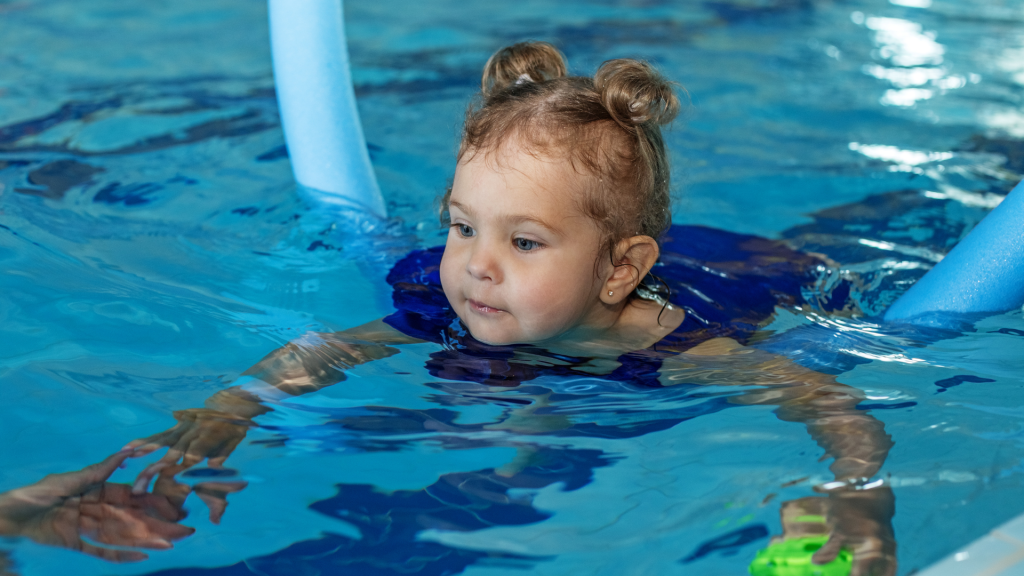
What is the Perfect Pool for a 6-Month-Old?
A warm, purpose-built teaching pool is particularly important for babies because much of an infant lesson involves supported activities rather than continuous movement. Gradual entry and different water depths can also make it easier to introduce new activities in an appropriate area of the pool.
Swim4Life’s magnesium mineral pools are maintained at approximately 32°C and feature gradual step entry and multiple depths. These features provide a warm teaching environment and allow activities to progress across suitable water depths as swimming skills develop.
How to Prepare for the First Swimming Lesson
There is no need to practise floating, face wetting or underwater activities before the first class. Early skills are best introduced during the lesson, where an instructor can demonstrate appropriate holds, positioning and support.
Before the first class, parents can:
- Choose a suitable lesson time around normal feeding and sleep routines where possible;
- Arrive early enough to change and settle before entering the pool;
- Bring a well-fitting swim nappy and a spare
- Prepare a towel and warm, dry clothing for immediately after the lesson; and
- Bring adult swimwear, as a parent or carer will be in the water with the child during the lesson
Swimwear, nappies and other practical items are covered in more detail in Swim4Life’s baby swimming guide.
What Should Parents Look for in a Baby Swim Program?
A suitable infant swimming program should be designed around the needs of babies rather than adapted from lessons for older children. The teaching approach, class structure and level of instructor attention are more useful indicators than starting age alone.
Important factors include:
- Infant-specific instruction with age-appropriate activities;
- In-water parent or carer support, with clear guidance on positioning and how to support the child safely.;
- Small class sizes that allow closer instructor observation;
- Gradual skill progression based on each baby’s response;
- A warm, purpose-built teaching pool; and
- Flexible attendance arrangements that make regular lessons easier to maintain.
Consistency is also important for early learning, particularly when babies are becoming familiar with the same movements and cues. Swim4Life provides further guidance on how often children should have swimming lessons.
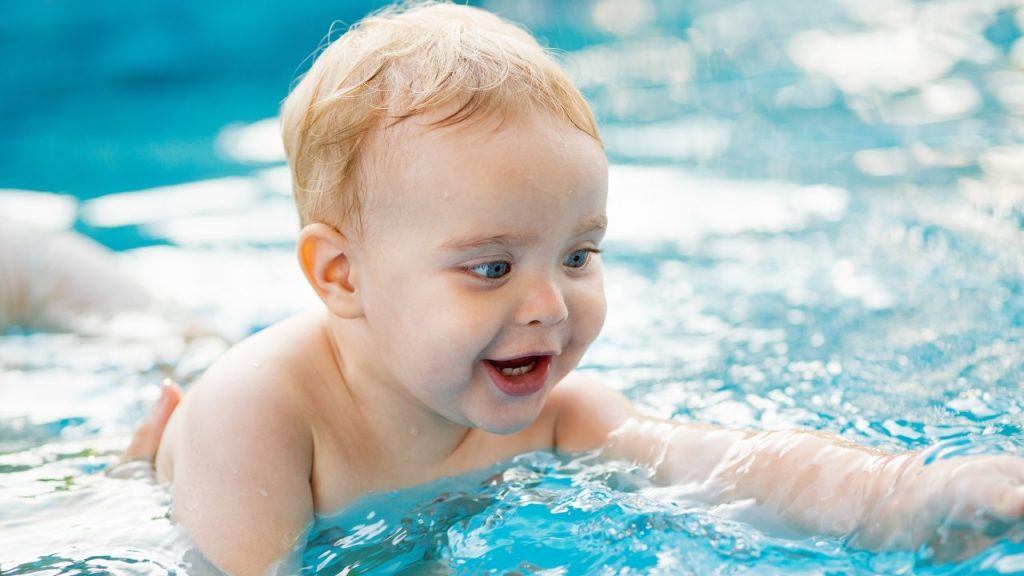
Why Choose Swim4Life for Baby Swimming Lessons in Melbourne’s West?
For families comparing baby swimming lessons across Tarneit, Williams Landing, Point Cook, Werribee and nearby suburbs, Swim4Life provides a dedicated Baby & Toddler pathway for children aged 6–30 months, with small classes and parents or carers involved throughout the learning process.
| Swim4Life Feature | What It Means for Infant Lessons |
| Baby & Toddler: 6–30 months | A dedicated swimming pathway beginning from six months |
| Baby Swim Starters: 6–18 months | An age-specific starting level for younger babies |
| Parent or carer involvement | Direct physical support throughout infant classes |
| Maximum four swimmers per class | More opportunity for individual instructor guidance |
| 30-minute lessons | A manageable format for several short activities |
| 32°C magnesium mineral pools | A warm environment for year-round lessons |
| Gradual entry and multiple depths | Supports different activities as swimming skills progress |
Families in Werribee, Hoppers Crossing, Wyndham Vale and Truganina can access baby swimming lessons in Tarneit, while baby swimming lessons in Williams Landing are conveniently located for families around Point Cook, Laverton and neighbouring suburbs. Current fees, deposits and enrolment details are available through Swim4Life’s Cost & Enrolment information.
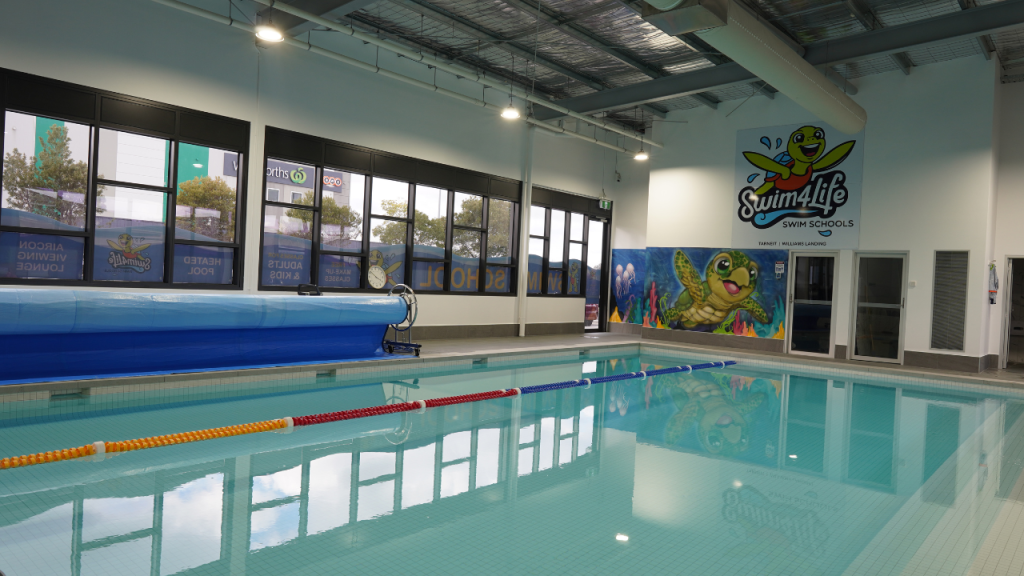
Start Baby Swimming Lessons at Swim4Life
Starting swimming lessons at six months provides an opportunity to introduce water gradually through age-appropriate activities and consistent adult support. Swim4Life offers baby and toddler classes at Tarneit and Williams Landing, with small classes, warm teaching pools and parents or carers supporting their child in the water throughout the lesson.
FAQs About 6-Month-Old Swimming Lessons
Is 6 Months Too Early to Start Swimming Lessons?
No. Six months is a recognised starting age for infant water familiarisation programs in Australia. Lessons at this age focus on supported aquatic experiences rather than independent swimming.
Do Parents Need to Get in the Pool?
Yes. Infant swimming classes are parent-assisted, with a parent or carer remaining in the water to provide physical support throughout the lesson.
Will a 6-Month-Old Be Submerged in the First Lesson?
Submersion should not be treated as a requirement of the first lesson. Early classes can first establish familiarity with supported positions, water around the face and breathing cues before progressing further.
What Happens if a Baby Cries During the Lesson?
The activity can be simplified, additional support can be provided or the baby can return to a familiar position before continuing. Infant lessons should progress according to the child’s response.
What if a Baby Is Unwell Before a Swimming Lesson?
A baby who is unwell should stay home until recovered. Swim4Life’s cancellation and make-up class policy explains the options available when a scheduled class needs to be missed.
How Often Should a 6-Month-Old Attend Swimming Lessons?
Regular weekly lessons provide repeated exposure to familiar activities and cues without requiring an intensive schedule. The appropriate frequency can also be considered alongside the child’s response and normal family routine.
How Much Do Baby Swimming Lessons Cost?
Fees vary by location and class schedule. Current weekday and Saturday pricing for Tarneit and Williams Landing is listed in the Cost & Enrolment information.