Swimming is a practical life skill and a flexible form of exercise that can be learnt or improved at any age. Adults may start with no previous experience, return after years away from the pool, or already swim independently but want to improve technique and fitness.
Starting later in life is also more common than many people realise. A 2022 report prepared by PwC Australia for Royal Life Saving Society – Australia found that 23% of Australian adults reported weak or no swimming ability. The right starting point is therefore not age, but what you can currently do with control in the water.
Benefits of Swimming for Adults
Swimming provides aerobic exercise while the resistance of the water engages muscles throughout the body. Pace, stroke, distance and rest periods can all be adjusted, allowing the activity to suit different levels of ability and fitness.
According to Healthdirect, regular swimming can improve fitness, muscle strength and general wellbeing. Water also supports part of the body’s weight, reducing pressure on weight-bearing joints such as the knees and ankles compared with many land-based activities.
For adults returning to exercise, this makes swimming a useful way to build cardiovascular endurance without relying on repeated ground impact. The workload can increase gradually as technique and fitness improve, rather than beginning with long or demanding sessions.
Swimming can also support mental wellbeing as part of regular physical activity. The combination of movement, breathing rhythm and time away from everyday routines can provide a clear change of focus, while the mental health benefits of swimming can extend to mood, stress management and general wellbeing.
Improved swimming ability also makes participation around water easier. Pools, holidays and recreational activities become more accessible when a person can control breathing, float, change position and move independently rather than relying on confidence alone.
Starting Swimming as an Adult
For many adults, the main barrier is not physical ability. It may be embarrassment about learning later in life, concern about being watched, discomfort around deeper water or the feeling that swimming is a skill they should already have.
These concerns do not need to be resolved before lessons begin. Adult instruction can start with basic water familiarisation, including putting the face in the water, breathing out underwater and learning how the body floats, before progressing to complete swimming strokes.
For some people, hesitation comes from limited experience; for others, a previous negative experience may have created a stronger fear of swimming. In that situation, the priority should be controlled exposure to the water and predictable skill progression rather than immediately increasing distance.
Royal Life Saving Australia advises that people can learn to swim at any age and recommends beginning with water familiarisation when necessary. Starting with the skill that is currently missing creates a clearer progression than trying to match the ability of other swimmers in the pool.
How to Start Swimming at Your Current Level
Before choosing a workout or setting a lap target, identify what you can already perform consistently. If breathing, floating or body position remain difficult, adding more distance usually increases fatigue without solving the underlying problem.
A practical starting point is:
- Little or no previous experience: Begin with safe entry and exit, submersion, breathing, floating and returning to standing.
- Able to swim a few metres: Develop breathing coordination, body position and controlled kicking before extending the distance.
- Able to complete a short length: Look for the point where technique begins to change, such as lifting the head to breathe, sinking legs or excessive kicking.
- Returning after several years: Start below your previous distance and intensity, then rebuild stroke control before increasing workload.
- Already swimming independently: Use each session for a specific goal, such as improving freestyle efficiency, developing another stroke or increasing endurance.
For a new swimmer, control is a better early measure than distance. Swimming 10 metres with steady breathing and stable body position provides a stronger base for progression than completing 25 metres with repeated breath-holding, rushed movements and stops.
Beginners should also practise in an environment that matches their ability. Healthdirect recommends starting at a comfortable pool depth, swimming where appropriate supervision is available and increasing distance progressively as fitness and confidence improve.
Those starting with little or no experience may benefit from beginner swimming classes for adults, where the early focus is on fundamental skills rather than lap distance.
Core Swimming Skills to Develop First
Swimming becomes more efficient when the fundamentals work together. Breathing affects head position, head position influences body alignment, and poor alignment increases drag and the effort required to move through the water.
- Breath control is one of the first skills to establish. Exhaling while the face is underwater allows the next inhalation to be quicker and more controlled, whereas holding the breath often causes tension and disrupts stroke rhythm. Developing consistent swimming breathing technique can therefore make a noticeable difference before distance is increased.
- Floating and recovery develop control when the feet are no longer on the pool floor. Practising front and back floating together with returning to an upright position helps swimmers understand buoyancy, balance and how changes in head, arm and leg position affect the rest of the body.
- Body position and gliding determine how efficiently the body moves through the water. A relatively horizontal position creates less resistance, while a streamlined glide from the wall allows swimmers to practise alignment before adding kicking and arm movements.
- Kicking should support balance and forward movement without creating unnecessary fatigue. Large or rushed kicks often use more energy than they contribute to propulsion, particularly when the swimmer is also trying to coordinate breathing and arm action.
- Stroke coordination develops once the individual components become more consistent. The goal is to combine breathing, arm movement and kicking into a repeatable rhythm rather than trying to increase speed before control is established.
Not every swimmer needs the same amount of work on each skill. Someone who floats comfortably but becomes breathless after several metres may need to focus on breathing and efficiency, while a person who is uncomfortable with submersion should establish that skill before full stroke development becomes the priority.
How Often Should Adults Swim?
There is no single weekly frequency that suits every learner. The right schedule depends on current ability, pool access, work and family commitments, and whether the goal is skill development or independent fitness training.
For someone learning the fundamentals, one structured lesson each week can provide a practical starting point. A separate practice session may then be used to repeat familiar skills, provided the swimmer can practise them safely and understands what they are trying to improve.
Consistency matters more than choosing an intensive schedule that cannot be maintained. Regular exposure to the same breathing, floating and stroke skills gives the swimmer more opportunities to repeat them correctly, while long gaps can make it harder to establish reliable movement patterns.
Once swimming becomes independent, frequency can be adjusted according to fitness goals. People using the pool primarily for exercise can gradually increase distance, session duration or training frequency, while more structured swimming for weight loss should be approached differently from a beginner learn-to-swim program.
How to Measure Progress When Learning to Swim
Progress should not be judged only by the number of laps completed. For new swimmers, improvements in breathing, balance and control often appear before a large increase in distance.
Early progress may mean putting the face underwater without immediately lifting the head, exhaling more consistently, maintaining a front or back float, or returning to standing without rushing. Later, it may mean completing the same distance with fewer stops, keeping the stroke consistent for longer or using less effort to cover a familiar length.
These changes matter because distance can hide poor technique. A swimmer may force their way through a longer length while still holding the breath or using excessive movement, whereas greater efficiency shows that the underlying skill is becoming more reliable.
Progress is therefore more useful when compared with the swimmer’s own previous ability. Age, previous water experience, lesson consistency and practice between classes can all affect how quickly individual skills develop.
Choosing the Right Adult Swimming Lessons
The right lesson format depends on current ability and the amount of individual instruction required. Someone learning to submerge and float needs a different starting point from a swimmer who can already complete several lengths but wants to improve freestyle technique.
Group lessons can suit adults who are comfortable learning alongside swimmers at a similar level. Private instruction may be more appropriate for someone who prefers greater privacy, needs more individual feedback or wants to focus on a specific issue such as breathing, body position or stroke timing.
At Swim4Life, adult swimming lessons are available from beginner through to more advanced levels at Tarneit and Williams Landing. Lessons can cover water confidence, breathing, floating, water entry and stroke development, with freestyle, backstroke, breaststroke and butterfly introduced according to ability.
The lesson format may also change as skills develop. A swimmer may begin with more individual support, move into group instruction once the fundamentals are established and later use independent swimming as part of a regular fitness routine.
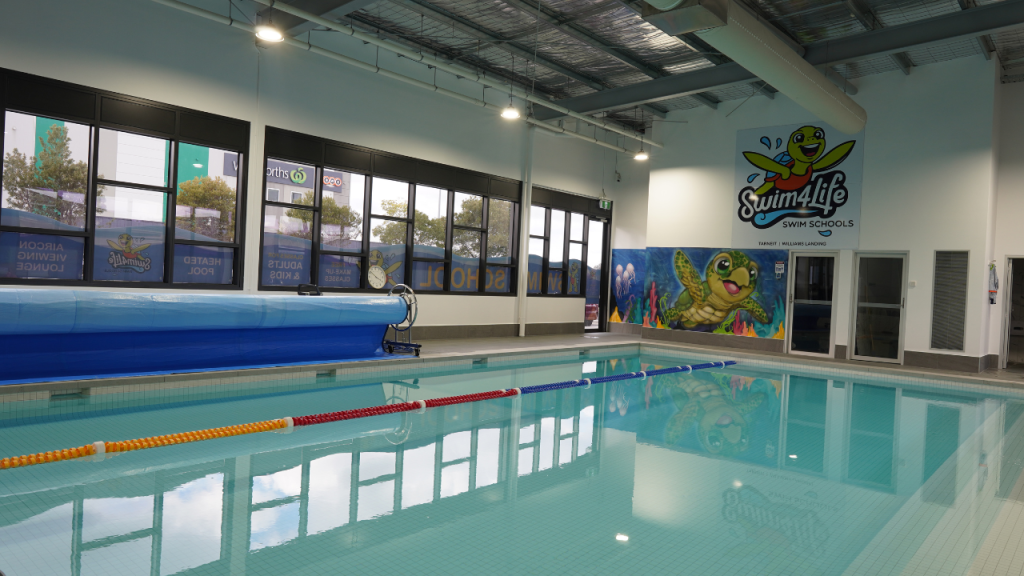
Adult Swimming at Swim4Life: Learn and Progress at Your Own Pace
Swim4Life provides an environment designed to help adults learn, return to swimming or improve existing skills with fewer common barriers. At Tarneit and Williams Landing, adult programs can support different starting points, from basic water confidence and breathing through to stroke development and more efficient swimming.
The facilities are also suited to gradual progression. 32°C magnesium mineral pools provide a warm setting for year-round lessons, while multiple pool depths allow new or hesitant swimmers to begin where they feel more secure before moving into deeper water as their control develops.
This combination of appropriate pool conditions, structured instruction and ability-based progression makes Swim4Life a strong choice for adults who want to develop at a manageable pace. Rather than expecting every swimmer to follow the same path, lessons can focus on the skills that are most relevant at each stage, whether that is floating, breathing, body position or stroke technique.
For swimmers around Werribee, Hoppers Crossing, Truganina and Wyndham Vale, swimming lessons in Tarneit may be the more convenient option. Those based near Point Cook, Laverton, Altona and surrounding suburbs can consider swimming lessons in Williams Landing.
Current swimming lesson costs and enrolment details are available for both locations.
FAQs About Swimming for Adults
Am I Too Old to Learn to Swim?
No. Swimming can be learnt at any age. Adults with no previous experience can begin with water familiarisation, breathing and floating before progressing to complete strokes.
Will I Be in a Class with Children?
Adult swimming programs are designed for adult learners and ability levels. When enrolling, confirm the available adult class times and format at your preferred Swim4Life location.
How Long Does It Take to Learn to Swim as an Adult?
There is no fixed timeframe. Previous water experience, confidence, lesson consistency and practice all influence how quickly individual skills develop.
Do I Need Lessons If I Can Already Swim?
Not necessarily. Lessons can still be useful when breathing, body position, stroke timing or another technical issue is making swimming unnecessarily tiring or limiting further progress.
What Do I Need for My First Swimming Lesson?
Comfortable swimwear, goggles and a towel are sufficient for most people starting lessons. Any training equipment required for specific exercises can be introduced as part of the lesson.
How Much Do Adult Swimming Lessons Cost?
Fees can vary by location and class schedule. Current pricing is available through Swim4Life’s swimming lesson costs and enrolment information.
Where Can I Find Adult Swimming Lessons in Melbourne’s West?
Swim4Life offers adult swimming lessons at Tarneit and Williams Landing, serving nearby suburbs including Werribee, Hoppers Crossing, Truganina, Point Cook, Laverton and Wyndham Vale.